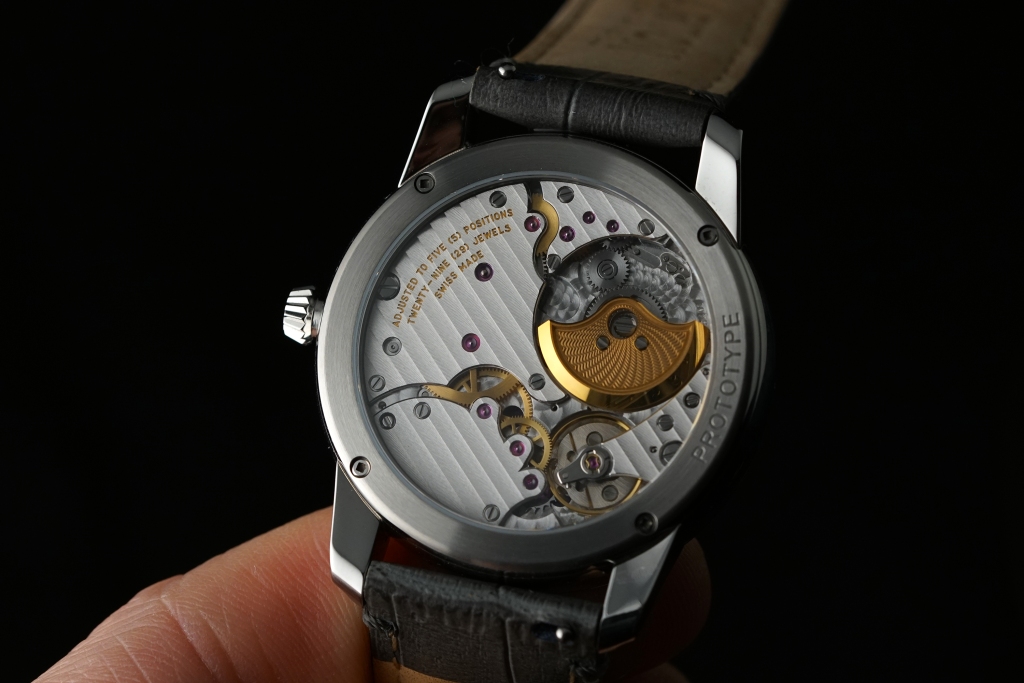
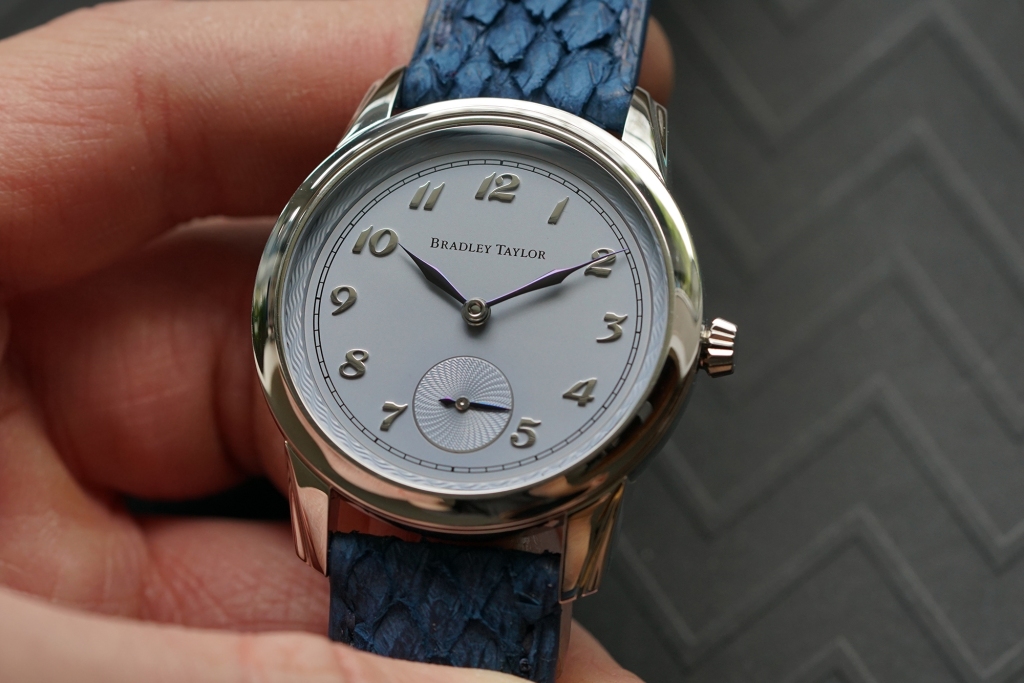
#LookCloser – A Conversation Between Jon & Furry – La Semaine Louis Erard x Alain Silberstein (˚▽˚)(`︵´)(•◡•)(•~•)(•_•)

Prologue

Louis Erard is a historic brand that like many had its roots about a century ago (1929 in this particular case), and over the years saw ownership change hands as the industry went through numerous lean and tumultuous years. Now, Louis Erard uses standard Sellita, ETA, and Valjoux movements and has an array of designs available. As a result, their prices are very reasonable, but upon further investigation, their designs certainly have aspirations of higher-priced watches. For instance, their Heritage line of watches resemble the Omega Trésor, or the A. Lange and Söhne’s Saxonia models. 

Their Excellence line is the brand’s area of ultimate expression and experimentation. It is within this line that they have recently collaborated with Alain Silberstein. Originally an architect, Mr. Silberstein started his own watch brand in 1987. He then released his own iconic design language which has lasted until this day. Since closing his brand many years ago, he has designed watches for many companies and most of them were quite expensive, most notably his recent work with MB&F. Now with Louis Erard, his designs are priced at a much lower price point of 3,500 Swiss Francs, which brings us to today’s discussion. 

The Matick Blog’s in-house podcast master Jonathan Thong and contributing writer Furry Wrist Abroad have a few things in common. They both love sake and soju. They are both petrolheads and at one point in their lives both bled gasoline when cut. They both of course adore watches, and for the first time bought the same limited-edition watch, the La Semaine by Louis Erard and Alain Silberstein.


Alas, it was the adorable faces of the day indicator that spoke to me the most, especially the grumpiness that represented Monday and also my entire being. (`︵´)

– Jonathan Thong, 2021

Jonathan Thong: I remember scrolling through Instagram quite late at night, or perhaps early in the morning for most normal people. I may or may not have been a few drams of whisky in at that point, but when I saw this new collaboration between Louis Erard and Alain Silberstein, I knew I had to have one. Now, my connection with Alain Silberstein goes back to my father giving me his Pikto PK11, which kind of kickstarted my deep dive into the rabbit hole of mechanical watches. The problem now was figuring out which one to buy, especially considering my level of intoxication.

Furry Wrist Abroad: Wow, I had no idea that you already had a Silberstein! Since I am not as in tune with industry releases as you are, Jon, I first came across this watch when my friend Ben (@canadianwatchguy) came to Toronto for a short visit. It was then that I tried on the watch and we both fell into silence. I let out a long audible sigh and then a “Fuuuuuuuuuuuuuuck…” for the watch looked perfect on my wrist. My friend started laughing uncontrollably as he knew why I was upset and he agreed that the La Semaine was a perfect match for my wrist. A couple of weeks later, after he decided that the watch was not for him, I bought it from him as fast as I could.

JT: It’s great that you got to see the watch in the metal before making your incredibly fast and also correct decision to purchase! Obviously I only had a few pictures to go by, but there were also three choices. One was the Regulateur, which I believe was also the first collaboration between Louis Erard and Alain Silberstein. The other was a Monopusher Chronograph, and this emoji day indicator (˚▽˚)(`︵´)(•◡•)(•~•)(•_•) rounded out the collection. Yes, there was the option of buying all three as a set, but I feel that may have been too extra. And so began my process of elimination. Alas, it was the adorable faces of the day indicator that spoke to me the most, especially the grumpiness that represented Monday and also my entire being. The Regulateur may be considered the flagship in this collaboration, and the Monopusher Chronograph was a unique addition to the set, but… look at those faces!

FWA: I had no idea that it existed before seeing it in person. The case was what sold it to me. It just made sense on my wrist. The case simply fits my wrist perfectly. I have a feeling that if my friend had bought any of the other variants, that I would have taken that one off his hands. Ultimately if I could choose between the three, I would in hindsight have gone with the chronograph. I have been wearing this watch almost every day, and there have been multiple occasions when I needed to measure an event. Honestly, as adorable as the emoji wheel is, the case and the character of the series of watches is what won me over. Thus the added functionality of the chronograph would have been appreciated for about a dozen instances already with only a couple of weeks on the wrist. Buying such a watch sight unseen sounds like a harrowing proposition for me. How has the watch proven itself now that you have had some wrist time with it?

JT: Honestly, I was not sure how the watch would look on my wrist. On paper, a 40mm x 11.6mm case measuring 47mm lug-to-lug is pretty much within the sweet spot of wearability. But this watch has an interesting lug construction, where it appears to stretch outwards from the middle of the case, which I’ve described previously as De Bethune-esque. It creates a tonneau shape, but with gaps between it and the proper circular case so we can gaze upon our hairy wrists. However, after strapping it onto my wrist, which is literally the case since it comes with a nylon Velcro® strap, I’m pleased to say I was quite happy with how it looked and felt.

FWA: I adore that Velcro strap by the way. I’ve worn it with formalwear and to a heated yoga class already and it did not miss a beat. Mr. Silberstein mentioned in interviews that he wanted to replicate the strap on the Apple Watch®, and he certainly knew what he was doing. The only occasion that the watch itself had faltered in is its low-light legibility. I often find myself in low light scenarios, hence my love for high-legibility watches and fast-aperture camera lenses. I do forgive it whenever I catch a glimpse of its beautifully lacquered hands, however.

JT: Honestly I’m not very bothered about that since, as you might have heard from KC, I don’t always set the time on my watches. But glancing down at the dial is just such a delightful experience, seeing the colours, the funky hands, and especially whatever emoji is being shown.

FWA: That mentality is something that would have been alien to me in the past. Now that I have lived with this watch, I can totally understand your viewpoint on this. I adore how the curve of the yellow seconds hand perfectly caresses the date wheel window and the red circular hour hand as it briefly passes by. This watch is an absolute treat to view during the quiet moments on a hectic day. Outside of some artsy Swatches in my collection that I have never worn, this LE is the first “Art Watch” that I actually like to wear. Oddly the day being represented by the emoji totally makes sense as well somehow. What a ridiculous fun watch. This is exactly the kind of stupid that I need in my life these days.

JT: I totally agree with you on the curve! Little details like that really elevate the design of the watch. Also, it is an element that Alain Silberstein has been playing with in the past, as the same kind of seconds hand can be found on the Pikto that my dad gave me. The circular hour hand also frames the day wheel, and almost frames the whole Louis Erard logo at 12 o’clock. I love how you say you need this kind of stupid in your life. Like, the watch collecting hobby can get quite stuffy at times, but fun little pieces like this inject some humour or soul into a world with too many Oyster Perpetuals.

FWA:  I asked my friend why he bought it and ultimately decided to let the watch go, and his reasoning made sense for him. He had recently consolidated his collection of about two dozen watches down to about four. He felt that his collection was a little too conservative and wanted something fun. He tried to get one of the Ming x Massena Labs collaboration pieces, but this thing came along and he pounced. He felt he needed something a little more special and unique in his collection, but ultimately he decided that it was a little too avant-garde of a design to be worn regularly. I thought I would wear this watch only on special occasions, but it has proven versatile enough to wear almost in every scenario besides diving.

JT: For me, the decision of which watch to wear usually comes down to what I plan to be wearing, and even then it doesn’t really affect my choice that much. Also, being in whatever stage of lockdown this is, I’m lucky if I’m even wearing pants, let alone a watch. Plus, I would say I don’t really live quite an active lifestyle as you do; some may even say that I am sedentary. So, I didn’t really have to consider my activities when making a decision to purchase. 

FWA: I don’t know if I would say that you are sedentary. Drinking on the level you do takes years of training and has its own particular brand of endurance. Speaking of endurance, this is a rather robust sports watch, with a case that incorporates both Type 2 and 5 titanium. Whereas I see a timepiece as complex and unique as this being on my wrist frequently for years to come, I wonder what its place is in your collection. What do you feel it adds to your collection, and has it influenced your collecting moving forwards? I fear it may have for me.

JT: I would like to think I’m pretty set in my ways of watch collecting, but then again, maybe because my scope is relatively broad. I’d say my main focus is on aesthetics, but there would have to be something unique about it, rather than merely being an objectively good-looking timepiece. Whether it’s a personal connection or some elements of fun, both of which are present in the La Semaine for me, there needs to be something that affects me deeper than just aesthetics. So with that in mind, I think such a fun, contemporary art piece like this La Semaine can fit in my collection comfortably with classics like the Submariner or Speedmaster.

FWA: I think that I am on the same page with regards to where this watch sits in my collection. This watch signifies a lot more for me, though. First, it reminds me of my friend and the many virtues and qualities that he represents that I admire him for. I have found that such a timepiece does break the ice a little when meeting strangers. Lastly, my good friend Mark (@constellation_m) described it as intelligent stupid after hearing me call it the right kind of stupid. At a distance, this watch simply looks like a joyous toy watch, and when in a rush I have told over a dozen people in passing that it is an IKEA watch when asked. Upon close inspection, its case, the careful execution of all of its dial elements, its comfortable strap, and most importantly for me the crown, something much bigger comes to light for me. 

The crown is perfectly shaped for getting a positive yet gentle purchase on it for winding and setting the time. This level of sophistication is what is needed to satisfy me in today’s climate of constant lockdowns, economic suffering, and the colossal measures of suffering happening globally due to climate change and failing states. To present a watch at this price, and with this level of levity without the refinement and poise in its design and manufacturing would have simply felt wrong to me when I wore it. Everyone’s experience during this pandemic has been different, and continues to vary, but in my day-to-day life, this underlying sense of maturity and thoughtfulness is required whenever I make light of any topic, even that of my choice of timepiece.

JT: That’s quite a good point. We’ve all suffered in our own ways, but we should also recognise our privilege to be in a position to drop money on a luxury item. But of course, true connoisseurs of the fine arts like ourselves wouldn’t simply be spending on any item, and I think we’ve covered all the reasons why we did so in our conversation. Hopefully, soon we’ll be able to spend money on experiences that make us happy, for a change. Perhaps you can enjoy that Malaysian diving trip you’ve been talking about!

FWA: Oh my goodness that trip sounds amazing right now. I had even gone far enough to plan that trip to include an additional two weeks in Okinawa. To be honest, all I would be happy with is some time away from the outreach of my phone’s notifications. Until then, we both will have to be happy with looking down at these wondrous mechanical works of art on our wrists.


For more information on the La Semaine Louis Erard x Alain Silberstein, click here.

For Team Matick,

Jon, Furry.
#FieldNotes – The Perils of Boredom with Collecting Watches and a Surprising Solution

18 Aug 2021 – @FurryWristAbroad

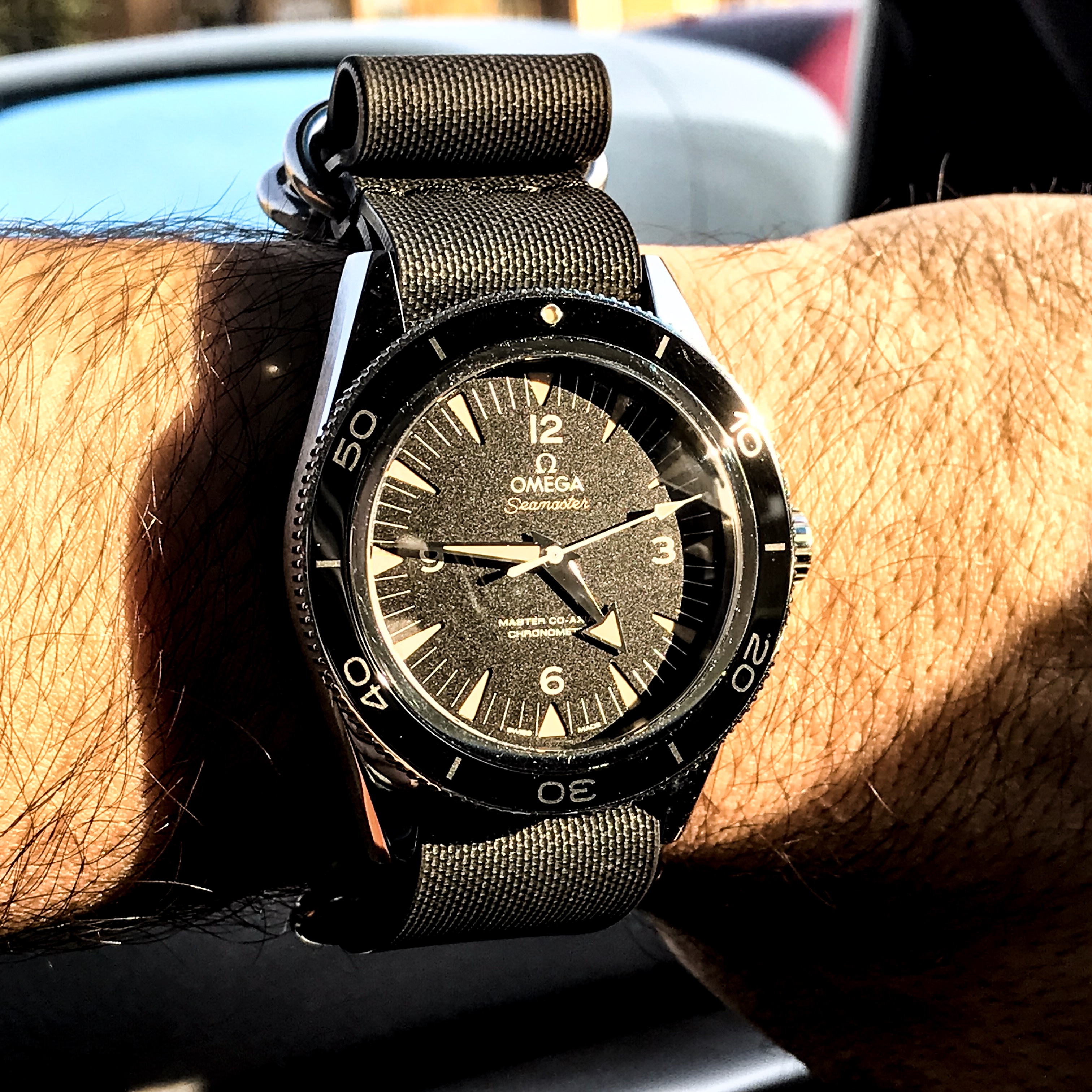
BASELWORLD 2014 should have been a warning for collectors such as myself. Though Omega released their beautiful vintage-inspired Seamaster 300 Master Co-Axial Chronometer resulting in me rushing out to put my name down on one, many other brands such as Tudor, JLC, and others did the same. Seven years later, there has not been a major release from such brands introducing an entirely new design language for the entry-level luxury watch market. Omega continues to mainly reiterate designs from decades past. Tudor continues to roll out new versions of their Black Bay. Rolex continues to release the same model lines with technical improvements seeing only minor changes to their dimensions. Oris continues to evolve their Aquis and Pro-Diver lines with their bespoke lug design language.

The entire market seems rather stale as a result. Microbrands continue to issue their takes on historic timepieces with Autodromo, Brew, and Dietrich being the exceptions. Hold on to the thought about Dietrich for a minute as we shall return to them soon. However, some of us are not only collecting watches because of their design or new technical improvements; we purchase a watch, new or used, for its history and continue to enjoy sharing life experiences with it as we wear it. This last point offers a glimmer of hope as a collector, for it is not only the watch that we could be collecting, but their inherent history and all that it brings.

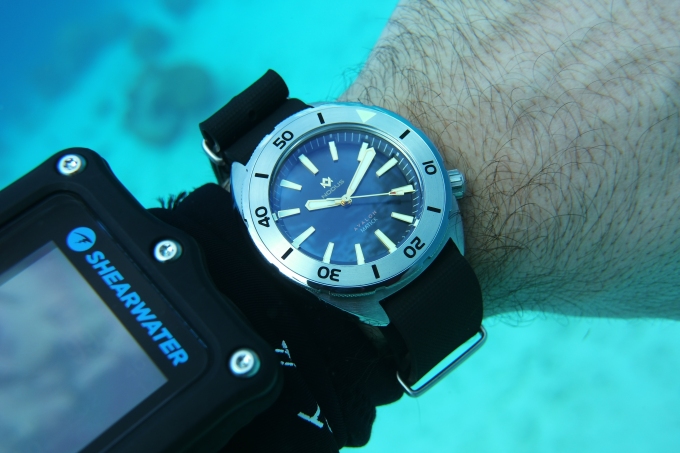
After taking the Nodus “AvaMatick” Avalon on its first dives in Bonaire, I gained a new appreciation of and direction for my collection moving forward. The Avalon resulted from two years of hard work by the two founders of Nodus Watches with whom I had become friends. The AvaMatick was a collaboration between Nodus and the The Matick blog. In the last year, I have shifted my focus to watches that have a history with my friends.

First was the Tudor Ranger owned by my good friend @jwit94. This watch and its smile dial mirror the youthful energy and strength he brings to every room he enters. As a paramedic and a Renaissance man, Jake is the kind of person that one would like one’s children to emulate. As a result,  to this day I wear his Tudor proudly reminded of the standard he sets and aim to do the same.

Second was the Marathon Chronograph Search and Rescue which was owned by designer Matthew Smith-Johnson. Those of you who frequent The Matick are already familiar with Mr. Johnson. From his appearance on the KC and JonJon Show podcast, everyone got the sense of exuberance and joy with which he approaches everything. In person, he does the same with a pure heart and uncontaminated intentions that are a breath of fresh air in the days of misinformation and shrewd decision-making permeating every facet of one’s life. Matthew wore this Marathon on a couple of charity endurance bike races in years past, and when he mentioned that he was letting go of it, I sprung into action and took it off his hands. Today I wear this decidedly rugged tool watch on very hectic days for recording elapsed time for invoicing, and when my sense of humour has run dry. It is during these times that I not only look down at this watch for time-telling purposes, but to be reminded of what a kind heart, an appreciation for details and how those details have relevance in the past and in the future, all bring to the table. As a result, hectic days when I wear this watch are enriched with a level of sentience that would otherwise be unavailable to me.

A couple of days ago, I placed a pre-order for the Dietrich Skin Diver. Dietrich has his own design language, and I fell in love with it after reviewing his Pure Time – Time Companion Series  designed in collaboration with Matthew Smith-Johnson. Due to its not having a chronograph or a dive bezel, I passed on the opportunity to pick one up. Little did I know that our very own Marshall of Team Matick was working on this Skin Diver with Emmanuel Dietrich. After hearing about how they came to design this timepiece, I had to have one. I mentioned on the first episode of The KC and JonJon Show podcast that I had appeared on why I choose to write for The Matick. Unlike other blogs and sites, it is headed by working professionals who time and again exhibit an admirable sense of morality and duty. I imagine myself looking down at the carefully executed dial of my incoming blue Skin Diver and being reminded of the exemplary humans behind this watch.

This is how I have lately started to derive joy from watch collecting. The humans behind the timepieces, and carrying a piece of them and what we admire about them, is what gets me excited about watches now. To be honest, I have never enjoyed this hobby as much as I do now that there is deeper meaning to me.


(Since the time of writing this article, I have bought two more watches from close friends and my passion for this new manner of collecting continues to grow)

For Team Matick,

Furry

#LookCloser – Au Revoir, Seals Model A.5 – Michael Knight Edition, in Collaboration with Matt Smith-Johnson

FurryWristAbroad (FWA)

Marshall: Just FYI, our KC&JJ episode with FWA and MSJ is now out! Check it out here:

Prologue

A farewell for the brand’s iconic watch, in collaboration with designer Matt Smith-Johnson.

– FWA, 2021

Over the last two years, the integrated bracelet steel sports watch gained traction from a lot of microbrands. The founders of Nodus Watches, Cullen Chen and Wes Kwok, mentioned on their highly entertaining and informative podcast Long Roads that they too wanted to take on the genre of watches popularised by Gérald Genta. 

Last year, I reviewed the Dietrich Pure Time for another website. I still consider it a modern classic, and the stainless steel model simply spoke to me. It modernised the Genta formula and added a design language that only a brilliant mind such as Emmanuel Dietrich’s could conjure. The Pure Time was a collaboration between Dietrich and Matt Smith-Johnson. Mr. Smith-Johnson’s designs have a way of extracting unexpected characters out of already existing model lines. In the case of the TC Pure by Dietrich, he expertly designed a timepiece that is arguably the perfect integrated bracelet steel sports watch. I still to this day get little pangs of pain from missing that watch.

So, when I heard that Mr. Smith-Johnson had collaborated again on another watch, but this time with the much-adored brand Seals Watches, I simply had to have some time with the watch. This is the third A.5 which Mr. Smith-Johnson has designed, and it is arguably my favourite. 


How it Wears

We shall start out this review with a matter of perspective. Due to the nature of my life and the work that I do, I simply do not wear watches with integrated bracelets, or ones that have bespoke lugs. For the daily grind, wearing any bracelet is not an option for it would utterly destroy the laptops I work on. Do not even get me started about dive watches with integrated bracelets and straps when taking them underwater.

With that out of the way, I admire this genre of watches from afar. They carry with them an appeal that other watches do not. They, more than any other genre of watches, look like a single piece of art. This cohesive character gives these timepieces the feeling of being an entire suit of armour for your wrists. The beautifully brushed case and bracelet add to this. At 12mm thick, the A.5 can slip under a cuff. It may, for the overall endlink-to-endlink length here is a staggering 60mm, up from its 50mm lug-to-lug. This will make those with wrists smaller than 6.5 inches potentially look elsewhere. I have a 6.75-inch wrist and it wears well to my eyes, as well as to those I asked. However, I do not like watches smaller than 40mm and wear a 51mm Garmin all the time. The bracelet just starts to taper at the end of my wrists. Any smaller wrists, and this watch may prove too awkward to pull off.

Like the Royal Oak, Nautilus, and the Dietrich TC Pure, the A.5 simply looks perfectly at home with any outfit. This limited edition Michael Knight model would look perfect with a suit or even at a formal event. If you are the sort of person who demands others to never wear a watch (or a dress watch smaller than 38mm) to a formal event, I am pretty sure that you also love the sound of your own voice. Yes, this is a limited edition, and the last model to be made in the A.5 range.


The Design

The exquisite detail of this dial is where this version of the A.5 proves to be my personal favourite. The matte dial is subtly raised from the grey seconds ring, and it truly leaps to your attention as a result. The crosshairs give the dial some grounding to not get lost in. The contrast between the hands, modern Arabic numerals, and gorgeous octagonal seconds hand tip makes legibility essentially perfect. The second chapter ring hovers above the other dial elements, further adding depth and weight to the viewing experience. The lume burns bright enough for this type of watch and never caused any concern.

The execution of this dial and all its elements truly makes this a timepiece the eye will never tire of. The applied and brushed steel Seals logo further adds to the watch’s character,  summarised by one word: substance.

The brushing from the logo extends outward to the case except for the outer bezel. This careful use of polishing dramatically frames the beautiful case. This genre of watches is known to be more loved by the owner as time passes. The more scars, the more attractive and alluring the timepiece becomes. So, any off-hand complaints about the placement of polishing on a watch of this design genre is simply nitpicking.

However, areas where one does not have to nitpick to find some fault are the clasp and the interaction with the crown. The crown guards do their job a little too well. With the crown fully extended, the user’s thumb and index finger will grind against the sharp crown guards. Winding a mechanical watch should be a pleasurable experience. However, reengineering the entire stem to pop out even further, or to get rid of these lugs, are in the former case impossible, and in the latter would make for a lesser watch. These crown guards are truly beautiful and add to the feeling of weight and a sense of severity.

The stamped clasp would be fine on most other watches, but it is out of place here. Though it looks delightful when on the wrist, especially with the powerful placement of the logo, its weight and tinny feel and sound do not belong on such a watch. The case and the bracelet of this watch are purposefully substantial, and the thin clasp simply does not live up to the rest of the watch. With the case of the watch being as substantial as it is, the weight balance of the watch is very top-heavy as a result. A milled clasp would truly elevate this watch. Keep in mind that this clasp was definitely chosen due to cost and that of availability from the various choice of suppliers. The microbrand space has to continuously combat with various factors that we as the consumer are not aware of. Usually if there is one or two characteristics of a watch that look and or feel out of place, it is for a good reason. This reason almost always comes down to the cost of production, and the tolerance for how much of that cost is passed down to the consumer.

Lastly, the bracelet links use a pin system. Granted, you will only have to change the size of the bracelet once, but like the stamped clasp, this is out of place today’s market. Screwed links and a higher-quality clasp would essentially make this watch faultless. 


Conclusions

Whereas Mr. Smith-Johnson collaborated with Seals to make two colourful renditions and remixes of the A.5, he now has created another timeless gentlemen’s sports watch that will stand the test of time. If you like watches that wear larger, and want a watch that you can take anywhere, then look no further than the A.5 Michael Knight by Seals Watches.

For more details and specifications, click here.

For Team Matick,

FWA

#LookCloser – When One Door Closes, Another Opens – Interview with Bradley Taylor, ft. the Paragon

FurryWristAbroad (FWA)

It is only when consumers are educated in this field, see the watch with their own eyes, and operate it with their own hands that they can then fully appreciate the level of painstaking work that goes into each watch.

– FWA, 2021

Prologue

It is difficult for some of us to see any silver linings that resulted from the pandemic. For those of us who escaped the grasp of the COVID-19 virus itself, its economic impact left a deadly wake across most industries. Independent watchmaking, a darling segment of the watch industry, was not left without its casualties. 

In 2019, we at The Matick Blog were privileged to take you on a journey with Birchall & Taylor, an independent watchmaking brand led by two gifted young watchmakers based in Toronto. As the pandemic marched on through the following year, the new brand saw signs that they would have to close their doors. As orders were cancelled and having their investors impacted by the global economic downturn, Charles Birchall and Bradley Taylor were forced to close operations on their beloved business.

Birchall & Taylor not only brought a high-end watchmaking studio to Toronto, but it was headed by two brilliant young watchmakers. Resolutely professional, kind, generous, and industrious, anyone who stopped by their workshop left with a sense of pride. This sense of pride was magnified by how the workshop grew in such a short time from the success of their first watch, the Reference 1. Shortly after having moved into their new workshop, the two watchmakers brought on another watchmaker to help with the workload, Theren Wang. Like Messrs. Birchall and Taylor, Mr. Wang is also an extremely capable watchmaker who studied in Switzerland. Mr. Theren’s quiet demeanour and amazing sense of humour added an air of sophisticated yet understated comedic subcurrent to the already charming workshop. With the addition of Mr. Taylor’s newly adopted dog Romy as the resident shop dog, Toronto suddenly was home to one of the most captivating houses of horology on the continent.

However, any grief felt for the closing of the business was short-lived. Charles Birchall decided quickly to go back to school and to arm himself with more tools for his future ventures. Bradley Taylor threw himself into his work and started mentioning that he might release a watch in the near future. This was a watch that he had already poured hundreds of hours of work into over the last two years.

A few weeks after the decision to close the business, I met with Bradley to go on a socially-distanced walk with his dog, Romy. Before our walk he said that he was moving to Vancouver. Instead of being sad for having a friend move across the continent, I got excited, for the beautiful landscapes of British Columbia are something that all of us in Ontario admire from afar. He then showed me three prototypes of his new watch, the Paragon. Before we get into the interview with Bradley Taylor, I will go over my impressions of these watches.


The Paragon

First Impressions

As Mr. Taylor showed me the three prototypes for his new watch, a certain song started quietly resonating in my mind. As a professionally trained classical musician, Johann Sebastian Bach’s Chaconne/Ciaccona, Partita for Violin No. 2 started slowly blaring louder in my head as I handled the watches. At first I did not recognise the significance of this until later that evening, after settling into my reading chair from being on the road for many hours. The watch shared many characteristics and features with one of the greatest written works of all time – regardless of genre or application. An exhausting performance and accomplishment for any performer to play in a mediocre manner, this composition offers the very best of the Baroque era. This masterwork of classical music shared many of its features with the new Paragon from Bradley Taylor, these being a focus on precise detail that leaves nothing to chance, and vividly contrasting elements, tones, textures, and ambiance.

From the very first interaction, this watch impresses. The crown invites winding with a beautiful shape. Here is where the watch’s first surprise awaits its prospective owner. This dress watch has a screw-down crown, boasting a water resistance of 120m. This excited me personally for this watch has more than enough water resistance for most non-technical dives. The engagement of the crown and winding action leaves no room for distasteful wiggles or unrefined grating sounds. 


The Movement

Viewed through the exhibition caseback, the excellent Vaucher 5401/32 provides a stunning view. This hand-finished movement puts other machine-finished movements from contemporary mass-market brands to shame. There is a reason why this movement alone costs thousands of dollars. This 30-millimetre movement has 160 parts, 29 jewels, and uses four gold blocks in its variable inertia balance resulting in a 49-hour power reserve at 21,600 beats per hour. All of this is made even more impressive when realising that the movement is only 2.6 millimetres thick. This movement is used by many other independent watchmakers who occupy this space, but also by larger brands whether it be the independents from Japan’s Kikuchi Nakagawa, Benjamin Chee Haute Horlogerie, to larger brands such as Hermés and of course Parmigiani Fleurier which owns Vaucher Manufacture Fleurier.

The 5400 series of movements see duty in various watches. The most affordable option housing this movement is the Slim D’Hermés, but this movement is used as the basis for independent watchmakers to showcase their strengths in case, dial, and hand design such as the aforementioned Nakagawa, the now closed Birchall & Taylor, to Bradley Taylor himself. Every level of this movement sings with its own voice, as if they are different movements in a carefully composed Baroque musical composition. The plates mirror their function in strength with strong bold Geneva stripes that invite one to look deeper into the movement. The staggeringly detailed 22-karat gold rotor foreshadows elements on the front of the dial, but we are getting ahead of ourselves. The contrasting finishing of all the gears is punctuated by the perlage background that directs one’s eyes onto the gold balance wheel, the second to fourth wheels, and the customised micro-rotor. The hand polishing on the edges of the plates demands your attention in a manner that is simply not present on less expensive offerings on the market. When one knows what they are looking at, there is not doubt that they are getting their monies worth here. This is just one of many examples of the attention to detail apparent as you turn the watch over and are greeted with the dial.


The Dial

For sourcing his dial, Mr. Taylor went to Swiss dial manufacturer Comblémine based in Saint-Sulpice. Many know this company who recently won The Men’s Watch Prize at the Grand Prix D’Horlgerie De Genéve with their 28SC, because of the dials in its owner’s watches, Kari Voutilainen. 

Working from its borders inwards, the same pattern on the micro-rotor outlines the dial and is in the small-seconds sub-dial. These raised sections add depth to the watch, and are greeted with the painstakingly hand-finished numerals designed by  Canadian typographer Ian Brignell.

The hands of this watch are what stood out to me. This makes sense when you find out that it takes Mr. Taylor around 20 hours to finish each hand himself. The gothic design makes this timepiece slightly nefarious in character. I could easily see this watch being worn by a supervillain in a movie. Personally, I have never encountered such a hand design with what seems to look like a blend of a leaf and a lance hand, and the tip of a teardrop hand. This timepiece has its own character altogether making this watch truly unique. This unique character and the concentration toward every possible consideration is highlighted with the tip of the minute hand gently pointing downward towards the minute track. We shall learn from Mr. Taylor himself as to what made him design such hands.

With these raised, engraved, hand-finished and engraved elements, the function of this dial is executed perfectly as it entices your gaze toward its act of time-telling. Bringing one’s attention toward the dial is accomplished by the hand-finished case.


The Case and Its Elements

It has been said by many enthusiasts and collectors that steel is the most precious metal in watches for it stands the test of time the best when compared to white gold. If one is planning on wearing one’s watches frequently and leads a non-sedentary life, steel is desirable for it can resist incoming impacts and be polished effectively if needed. The 316L stainless steel case is expertly hand-finished. When finished and polished to these levels, the case starts to have a certain glow. It reflects light back to one’s eye in a carefully choreographed manner. The bevelled lugs act in unison with the aforementioned elements in training the eye towards the dial. 

A unique feature which has nothing to do with the watch’s ability to tell time or that of legibility are the bespoke screws fastening the exhibition display caseback. For those of you who have not yet had the pleasure of meeting Mr. Taylor in person, this should give you a window in to what kind of human he is. It was not uncommon for people who were visiting the Birchall and Taylor workshop to see Mr. Taylor take a break for a few minutes. Instead of going for a walk or checking his phone while on his break, he would shift his focus towards inventing new items unrelated to watchmaking. I will not say what these items were, but this act of refreshing his state of mind before heading back to work speaks volumes as to the brain behind such a watch. The screw is probably the smallest square-headed screw in use to date. The design of this screw came from Canadian inventor Peter Lymburner Robertson. We shall hear from Mr. Taylor himself as to why he chose the Robertson Drive screw and its strengths in the interview portion. And yes, each screw is hand-finished by Mr. Taylor himself. This is the level of labour one should expect in such a watch.


Pricing and Availability

The Paragon is being sold for $22,000 USD which is in line with its competitors. These competitors offer haute horologerie levels of workmanship and detail in every facet of watchmaking. The one point which makes me personally sad is that the Paragon will be limited to 12 pieces. Due to being a single-person operation, Mr. Taylor can only produce so many watches himself. Those who collect watches and who are not strangers to spending this much on a watch may see this as a positive. As someone who has come to know Mr. Taylor on a personal level, I would like to see as many of his creations out in the world as possible, which brings me to my final point before the interview.

Most people question the existence of luxury watches. These people are only capable of questioning what is within their capacity of understanding and accumulated experiences which have shaped their opinions. I have heard some people question the point of a $800 Tissot Visodate. I have had others question as to why I would spend so much money on my Omega Speedmaster. I have seen many people who have become accustomed to purchasing watches under $10,000 frequently dispute the worth of watches such as those by F.P. Journe, A, Lange und Söhne, and even Patek Phillipe. These doubts are amplified when presented with a brand that they have not read about in their much-frequented online watch blogs and publications. 

What distinguishes varying levels of price ranges in the field of horology is not based simply on features. We are trained since childhood to hold up a product’s worth based on its features and surface levels of refinement. The level of workmanship for high-end watchmaking is similar to that of cars. The hours needed to finish each part of Mr. Taylor’s watch are not apparent to the untrained eye when viewing a compressed photograph on a screen. For someone who is unfamiliar with cars, seeing an all-black interior of a new $600,000 Rolls Royce Phantom would look no different to the interior of an all-black $40,000 Mercedes A Class in terms of refinement. It is only when consumers are educated in this field, see the watch with their own eyes, and operate it with their own hands that they can then fully appreciate the level of painstaking work that goes into each watch.


Knowing this, we will start our interview with Mr. Taylor with a harsh question, simply because we can.

The Interview

Furry Wrist Abroad (FWA)

Bradley Taylor (BT)

FWA: So before we dive into the pleasantries, I want to ask you why, but more importantly what. Why have you decided to design such a watch, and what in the world drives you, a single-person operation, to produce such a refined timepiece? Are you trying to make the rest of us look bad?

BT: Well that’s very kind of you. I can’t escape the allure of watchmaking. Making watches, like any other craft, requires practice and commitment and I am grateful my most recent work has been received so well.

FWA: Alright, with that out of the way, how is Vancouver treating you and has the move been a difficult one for your personal workshop?

BT: I am really enjoying Vancouver so far. It’s tough during the pandemic to create roots here but the area has so much to offer. The workshop has transformed from 2000 square feet to 80, so it’s required a lot of reorganizing, but I have managed to fit everything and can use my equipment with a more modular approach.

FWA: Every songwriter, author, and designer draws inspiration from other great works and in some cases relatively unknown achievements from the past. When initially designing the Paragon, were there any watches or pieces of design such as architecture which inspired you to give birth to such a unique watch?

BT: Of what I can consciously recall, themes of gothic architecture and storms managed to imprint themselves on the Paragon. The opposite-direction guilloché on the dial takes inspiration from a whirlpool.

FWA: The Paragon’s character is something which immediately made an impression on me. As you recall, while sitting in the lobby of your old condo in Toronto I mentioned that I could easily see a scene featuring the Paragon in my mind. This was one of a movie villain every day waking up, and gazing upon his vast collection of high-end watches, and selecting the Paragon every single day before he moved on to his wardrobe. The watch’s hands partially had something to do with this. But the unexpected tough and sturdy nature of the watch with its 120-metre water resistance could be felt when handling the watch. Before we get into the specific design aspects of the watch, what made you decide to make the Paragon go almost anywhere the human body could before risking decompression sickness?

BT: I got tired of worrying about my watch when I went away for a weekend or might be near water. I challenged myself and my casemaker to build the case for the Paragon to offer a much higher water resistance while preserving the appearance of an elegant watch. The screw-down crown provides an extra layer of security, and makes the sloped crown a pleasure to operate.

FWA: The merits of the Vaucher movement are well-known, but that of the dial manufacturer Comblémine may be a little less known to our readers. Their work speaks for itself when one looks at their long list of dials that were made for other brands. One such example is the intricate dials that they made for Sarpaneva. What about your design lead you to this specific company?

BT: It’s important to note that Kari Voutilainen purchased Comblémine in 2014. For anyone not familiar with the quality of Kari’s work, I would highly recommend taking a few minutes to acquaint yourself with it. There is a reason many important names work with his dial-making company, including MB&F, Grönefeld, Fiona Kruger and others – they operate with the same pride in their work as their customers do. When you work with them you can be confident your vision will be executed to a high level.

FWA: I mentioned the hands as a primary design feature which your watch utilises. What drew you to such a design? Furthermore, help our readers understand the process in making these hands. This not only being the hand finishing required, but the level of work required in producing the various colours of the hands on offer.

BT: It is quite rare to see purple tempered hands on a watch; the purple colour is much more challenging to execute than blue, as you are provided a very limited amount of time to remove the component from the heat while it oxidizes. Often each hand will have to be retempered multiple times, being polished each time in between to make a new attempt at achieving uniform colour.

FWA: Besides the logo, the typeface used for the hour indicators are the only other pieces of writing on the dial. Many can be forgiven for thinking that they are Breguet numerals, but if one actually pays attention, they will then realise that they are nothing alike. What was the collaboration process like with Mr. Brignell, and how did you two land on this typeface?

BT: I had started designing my own typeface; thankfully after going in circles for a few hours I recognized I would not be able to meet my own standards. Fate and a Google search led me to Ian Brignell, an incredibly accomplished Canadian typographer who has created an identity for so many brands, one of my favourites being the logo for Paramount pictures. Ian was excited by my project and spent time in the workshop learning and studying watch dials before creating the numeral set featured on the Paragon. Ian also created the wordmark for my name on the dial.

FWA: Like the numerals on the watch, you decided to use a Canadian design for the screws on the Paragon, the Robertson Drive screw head. What strengths does such a screw head provide and why did you scrupulously decide to hand-finish each screw in such a laborious fashion?

BT: I’ve always taken pride in the fact that most common screws in Canada are square drive, invented by a Canadian. It didn’t come as an immediate idea until I considered more ways to integrate Canadian elements into my work. The square head is challenging to manufacture but provides far more security than the typical flat head used, it is much harder to slip out of. Like all elements on the watch, the caseback screwheads receive the same attention and hand finishing.

FWA: The watch is available in either a black, pale blue, or purple dial. Each one has its own specific character; the black being very formal and timeless, and the pale blue being the watch that I have obsessively deemed as sinister. Which dial colour came first and speaks to you the most? 

BT: Pale blue, although I conceived the watch originally with a black dial, I really enjoy the difference in character when the dial or hands are made in different colours.

FWA: If a potential client were to come to you with a different colour in mind, first is this possible, and second which other dial variants did you consider that may not only work for the Paragon, but offer a distinct character from the rest of the colour options?

BT: Absolutely, many of my clients so far have chosen to have a custom dial colour for their Paragon. Salmon, or gold was a choice for my first round of prototyping – although I didn’t have the most recent design made in salmon, it looks excellent. I’m excited to see some of the new colours materialize as I begin to work on the series.

FWA: Lastly, looking at your work, it is obvious that you are a watchmaker for life and that the Paragon is only the start for your new self-titled watch company. Given this timepiece’s distinct and unmistakable personality, where do you see your work leading you in the near future?

BT: I have already begun some discussions with a collector about creating something special once I finish work on the Paragon series. For now I am looking forward to focusing on the Paragon.

FWA: Thank you once again for yet another probing interview, and as lovers of horology, we at The Matick Blog truly wish to see your work on many more wrists in the future in the decades to come. Some people may not know this, but you are not even 30 years old yet. This bodes very well for the field of independent watchmaking in our opinion.

BT: It was a pleasure, as always – thank you for giving me the opportunity to speak about my work.

For Team Matick,

FWA


Note –

Marshall: We at The Matick Blog would like to take this opportunity to profusely thank FWA for deciding to once again, let us run this amazing in-depth interview of Mr. Taylor on our humble little domain.

For more info, check out FWA’s work here and Mr Taylor’s latest creation <a href=”http://<!– wp:paragraph –> <p>https://www.bradleytaylor.ca/paragon</p> <!– /wp:paragraph –>” data-type=”URL” data-id=”<!– wp:paragraph –> <p>https://www.bradleytaylor.ca/paragon</p> here.

#LookCloser – Laco Rad Aux Limited Edition / And a Conversation with Matt Smith-Johnson

@FurryWristAbroad

Introduction

Every watch that I have received for review has presented its unique set of challenges. Hilarious contracts make you promise to return the watch in pristine condition when, in reality, the watch comes into your possession in tatters after months of abuse from other reviewers and influencers. There is also the fact that I am expected to take it diving and return it without the slightest of blemishes. The Laco Rad-Aux thankfully presented the best challenge and opportunity yet. This is the first watch I have handled that is literally a work of beautiful art, and the result of an immense undertaking by one designer and a historic brand. Furthermore, the watch pays homage to a video game series that is very near and dear to my heart, the Fallout series.

For this edition of #LookCloser, we will quickly go over this watch and give it a traditional review, followed by an interview with the man who designed this watch, Matt Smith-Johnson. In closing, we will go over watches in different forms of media, and how gaming plays a very special role in the lives of millions and why this watch is a significant timepiece in the history of horology.

“The Rad-Aux reminded me of the times when the Fallout universe and being immersed in it brought joy to my life. It also reminded me of the solace that the distraction of the various wastelands provided during difficult times. The bleak atmosphere was punctuated with sparks of constant dark humour that easily made certain periods of my life easier. “

– FWA

___

DSCF7155

The first thing everyone notices about this watch is the case and its manufactured patina. I usually engage with strangers in passing when wearing a watch for review for their opinion, and all of them immediately pointed out the case. Some immediately recognized it as being inspired by Fallout at first glance as well. Whatever the magicians at Laco do to make this case look the way it does is very effective. This magic is also a proprietary method that Laco uses for such projects. The details never seem to end, especially when looked at closely or under a loupe. All of these weathered details and damage accentuate the pronounced onion-shaped crown and the “RAD-AUX” plaque on the opposite side of the case. This mechanical watch certainly does look like a watch that has been passed down by generations of nuclear war survivors.

The only design decision that seems odd for this watch, and for it being in place in the Fallout universe, is the traditional German Flieger dial. Given the lore of the Fallout games, and that the overall design language being used is a mixture of Raygun Gothic and Art Deco, the German Flieger dial initially seems out of place. There are several weapons and other influences in the original artwork of the first Fallout games, and even in their predecessor called Wasteland, that could easily make such a dial design choice not look out of place on the wrist of an Enclave Vertibird pilot.

DSCF7054

DSCF7161

The execution of the dial is flawless. It is a work of carefully curated details. While the case is 42mm, the dial is 39.5mm, making this watch more wearable than what one would think just by looking at photos. The standard lug-to-lug distance of 50mm and the 42mm case make this watch very wearable. On the back of the case is a health bar progression graphic similar to the original video game Doom – another title now owned by Fallout’s parent company Zenimax, but more on this later. The brilliantly baked-on finish of the hands and the dial draw one’s gaze past the details of the strap and case. Though not aged, the 10, 20, 30, 40, 50, and 60 markers stand out a little to bring some of the design’s centre of gravity back toward the dial. It would be all too easy to get distracted with everything else going on with this watch, and these small calculated details speak to the ingenious and thorough design.

DSCF7080

DSCF7167

The wearability and the massive attention to detail that the case and dial were given extend to the strap. This strap alone deserves its own article. While the lug width is a very standard 20mm, the width of the bund backing goes from 33.75mm to 46.25mm. Again, one might look at photos or these dimensions and start condemning the watch as unwearable. This would be false and unfortunate. When you look closer at all the details, you might start to wonder why the price point of the watch is not higher simply based on the intricate detail of this strap.

DSCF7065

First, the back of the watch is supported by the aforementioned bund area. Many within the watch enthusiast community love to hate bund straps, but this strap would easily convert them. The bottom part of the thicker bund section is perforated, which results in a very breathable and comfortable strap. The design of the perforations also mirrors the floors seen in the Fallout universe such as in warehouses, factories, and some run-down settlements. One amusing feature of having a strap using such a complex layering of materials is that it seems to vibrate like a smartwatch when the user’s arm flexes throughout the day.

Beyond the bund section, the complexity of the strap simply astounds anyone gazing at it. The distressed and painted leather adds a certain degree of depth when seen at different angles. There are paint blotches all over the strap, further giving this strap a look that it has spent years in a messy wasteland filled with a century’s worth of industrial waste. The aqua blue stitching also matches the carefully positioned blotches to accentuate this effect. The very comfortable and capable keepers have a hazard pattern that resembles the ones found on the Pip-Boys of the early Fallout games. The second keeper mirrors the strap’s underside in its soft material and finish.

DSCF7144

DSCF7156

The vast attention to detail given to this watch makes it a fantastic companion throughout one’s day. I even managed to wear it with a suit on a couple of occasions, and though it may have looked out of place in the eyes of those who take it upon themselves to judge others based on their attire, it made me smile constantly. Having loved the Fallout series, seeing this watch on my wrist finally made me understand why there are so many Instagram watch-related accounts with “007” or other James Bond-related names. To be clear, I never liked the Bond series, for I found the movies and the womanizing and indestructible character to be a male power fantasy gone too far. In fact, I remember getting a little upset when my Seamaster 300 was announced to be a Bond watch a few months after buying it. Now I can see why these men love their Seamasters and the connection to the film franchise. 

The Fallout franchise, however, is not as pleasant as it once was, and recent events have been giving many devoted fans pause. We shall touch upon this at the end, but now we are going to dive into the mind of the zany, creative, and all-too-lovable designer of this watch. His name is Matt Smith-Johnson and he is a watch designer, writer, and the founder and creative director of Sentient Creative in Toronto. Sentient Creative builds marketing platforms. Multi-faceted and massively capable, having the opportunity to be a fly on the wall seeing Matt work is an eye-opening experience. It gives you the window into what a world-class designer and writer is capable of. 

So without further delay, here is the interview portion of the review:


FurryWristAbroad – FWA

Matt Smith-Johnson – MSJ

FWA: So before we get into the watch and its ridiculously beautiful and thoughtful design, what was your first memory of when you took notice of watches as a child?

MSJ: I can’t remember a specific moment, but I do recall having a sense that watches were important since I was very young. The first watch I remember having was an all-black and neon ZOT. I was probably around 7 or 8 years old (1990/1991). It was in a display case at Zellers or K-Mart, and I begged my grandfather for it. He caved in and got it for me. 

It was way too big for me. My granddad punched an extra hole in the rubber strap so it would fit my tiny wrist. I couldn’t even read the analog dial, but it was a prized possession. 

FWA: In your collection, which of your earlier watches speaks to you the most in terms of design? Has it, or another piece been most influential in your design work?

MSJ: I remember in college I had saved like crazy ($400 CAD) and got myself a Diesel DZ-7023 digital LCD watch. It was super angular, looked like a 70’s sci-fi sort of thing, a retro-futurist sort of thing. There was a button you could press to get a tip of the day. The only tip I remember was, “Smile at a stranger”—it was fun and quirky and that is what I loved about it. I still have it, but the digital module is dead from battery corrosion.

FWA: Besides the watch that is the topic of discussion today, which watch design of yours are you most proud of, and why?

MSJ: I have only done a few watch designs to date—it’s a new thing for me and I am hoping I can do much more from here on out. Before focusing on watches I did graphic design, and once upon a time, fashion. I try to avoid feeling proud of anything, to be honest. It’s no religious conviction or anything, I’m just always seeking my next task as a designer. 

Fallout 4
Fallout 4

FWA: Now let us focus on the wonderful Rad-Aux. Were you familiar with the Fallout universe before you undertook the project? As someone who adores the universe, its artwork, and its lore, I immediately thought that you were a veteran of the Fallout series.

MSJ: Oddly, I have never played the game. However, I am definitely a fan of the design, lore, and world-building of Fallout. Also a fan of the clever marketing campaigns. I love the animations they released for Fallout 4. 

It was actually Ariel Adams who suggested the Fallout angle for the RAD-AUX. I was originally inspired by Iris Haussler’s Abandoned Trailer Project from 2012. But researching Fallout for this piece allowed me to dive deep, and I can say I respect and admire that series even more as a result. Incredibly detailed world-building. 

FWA: What were the challenges in designing this watch in particular? What made you and Laco decide to go down the heavily detailed route that you did? It would have been all too easy simply to modify an existing model slightly with some Fallout themes and call it a day. You obviously did not do this. How many months of sleep did you lose over this project?

MSJ: The big challenge came with making the prototype on time for Wind-Up NYC, in 2018. I only had about 45 days to make the strap, box, postcard, manual, Polaroids, and bottlecaps. I used every available minute to get that done on time. The head of the watch was made by Laco in Germany.

Prior to that, designing the pitch for Laco took around 200 hours. There was a primary rough draft I shared with Ariel, and then a completed version with some additional details. 

FWA: The strap of the Rad-Aux is easily more complicated than many other watches or entire model line-ups of certain brands in itself. Take us through the design process that resulted in such an artful success. Not only is it beautiful, but it is easily one of the most comfortable straps I have tried on all year. Was comfort a primary goal with this strap, or did the design easily allow for it to be as snug, pleasant and homelike on one’s wrist as it is?

MSJ: I used to make straps back in 2011, and I think about strap design a lot. I wanted the strap to help make the watch look aesthetically closer to the Pip-Boy from Fallout, but also have the practical benefit of comfort. The perforated bund adds breathability while bulking up your wrist for the 42mm flat-lug case.  

FWA: Beyond the watch and the strap, the box and the many items that it comes with are simply delightful for a fan of the Fallout series. They help build the world for the timepiece as one opens the box, but also builds a wonderful relationship with the watch as this gorgeous box finds a nice home on a display shelf.

The box itself is actually rusted. For the reader to understand, it is actually covered in real rust. What was the process in making the box the way it was?

MSJ: I worked with a prop-maker from Delaware (Anders Aller) and we went back and forth a few times to get the look just right. He actually made a small-scale test version for me to begin with. Once I found the right tin maker in Chicago, I had them send him the prototypes for weathering. 

Anders and I had a discussion about what story the box needed to tell. I said it needed to look like it has been knocking around in a dirty rucksack for 50 years before being abandoned in a shed with a leaky roof. The result looks pretty accurate!

Anders was a delight to work with, and he also helped with the production of the bottlecaps. 

DSCF7109-1

FWA: The many little items within the box do a magnificent job of placing the watch within its alternative world. What pieces of lore did you decide to include in the artwork and why?

MSJ: For the fictional owner of the Rad-Aux, I developed a story arc in my head. The owner was someone compassionate, who grew into a needlessly confrontational individual; a storied and sentimental person, who came to an unceremonious and prosaic end. A life with an amazing story, consumed and forgotten by the passage of time.  

As for specific lore, I will say this: In Fallout, each vault has a unique story. One vault in particular, has a logically assumed outcome based on the parameters of the experiment it contained. I decided my character’s story would start there, in defiance of expectation.

FWA: Given the complexity of this project and its various parts that needed such a high level of attention, what have you taken away from this experience, and how will it affect your watch designs moving forward?

MSJ: Seemingly impossible goals can be achieved if you work with the right people. Everyone who helped me realize the completed prototype was amazingly supportive. I only worked with people who got as excited as I did about this project, and I can’t wait to do something like this again.

FWA: Thank you for taking time out of your busy schedule to entertain a fan of the Fallout franchise and someone who loves watches.

MSJ: No problem! Thank you for taking interest in the Rad-Aux project. 😎


Closing Thoughts

This watch has the possibility of being a historic timepiece. There have been video game-inspired and branded watches in the past, but not on the scale of the Rad-Aux, and definitely not made by such an established, reputable, and historic brand such as Laco. As many other brands force tie-ins and collaborations with movies, musicians, music genres, or cities, the Rad-Aux fully embraces the Fallout universe in its entirety with an astonishing amount of detail and design.

Many of the writers here at The Matick Blog were and are still gamers. As we have all grown up into working professionals, spare time has become an ever-growing luxury that sadly has resulted in us not playing video games as much as we desire to. Watches such as the Rad-Aux allow us to take the universes that we fell in love with along with us. 

DSCF7081

With all this being said, franchises such as Fallout and their integrity are in jeopardy. At the time of this writing, the subscription service for Fallout 76 called Fallout First has been released to much controversy and animosity from the gaming community. Ever since Bethesda’s parent company, ZeniMax Media, started to receive funding from private equity firms such as Providence Equity Partners, the company’s decisions have slowly started to alienate their consumers. 

The cycle of profit for a video game developer is unlike many traditional industries. They require a large amount of investment for two to four years to develop a game. Only after the game’s release, after several large installments of investments are made, only then can a video game developer and its stakeholders start to see some revenue. This is not a very attractive business model for investment firms. As a result, such subscription services and gambling and lottery tactics called loot boxes have been introduced within games to generate a continuous source of income. 

There is also the mechanism of forcing gamers to grind away at the same tasks and missions within the game. These are the only ways in which players can obtain desirable items within the game. These items can range from cosmetic upgrades to powerful items that give them a competitive edge against other players. These systems are based on an internal lottery systems such as random number generators. Usually players can purchase the right to speed up their progress by making it more likely for them to obtain the said desirable items by increasing their chances at the lottery. The developers then charge what they believe to be the perceived worth of these digital items. Fallout, like other game series, employs this method of revenue generation, and in the past players felt like they were being taken advantage of. The issue with all of these tactics is that they are supplying the consumer with features that were standard in an initial game purchase not too long ago. The government of Belgium has in fact made loot boxes illegal for they are exploiting children and those with addiction problems.

As a result, as aging gamers who only have a small amount of time to once again turn on their consoles or gaming computers, we are bombarded with these new predatory and unsavoury tactics. We do not have the time to grind away at repeated missions to progress in these games. Bethesda and other developers have introduced in-game stores such as their Atomic-Shop which attempts to keep selling the consumer more items as they keep playing the title they have already payed for. At least for the time being, there are fantastic games without these built-in extra sources of revenue outside of downloadable content. Some such games are The Witcher 3, the recently released The Outer Worlds, and the recently announced Hellblade 2: Senua’s Saga. These games reward their players with outstanding writing, level design, soundtracks, and most importantly fair and reliable gameplay.

Fallout New Vegas
Fallout New Vegas

The Outer Worlds (1)
The Outer Worlds

The Rad-Aux reminded me of the times when the Fallout universe and being immersed in it brought joy to my life. It also reminded me of the solace that the distraction of the various wastelands provided during difficult times. The bleak atmosphere was punctuated with sparks of constant dark humour that easily made certain periods of my life easier. Many can relate to this, as can the writers of The Matick Blog. Video games such as the Borderlands series have in fact created characters dedicated to those who used video games in the last moments of their lives as a coping mechanism. In Borderlands 2, the character of Michael Mamaril was made in loving memory of a cancer victim who played the series in his last days. This is the power of video games. This is why many of us keep coming back and will never give up on the genre of entertainment. No matter what difficulties the industry sees, just like the field of horology, we will not abandon our interests or support for such powerful industries and experiences. 

DSCF7139

My short time with the Rad-Aux brought me an unexpected amount of delight. It reminded me of the first time the massive slow creaking doors to Megaton opened, or entering the Cafe of Broken Dreams in Fallout 2 and running into the various other fourthwall-breaking Lone Wanderers, or having to decide whether to rescue or murder a replicant/android version of your son in Fallout 4. This is why I am thankful to Laco for undertaking such an exhaustive project as the Rad-Aux. This is why I am grateful to Matt Smith-Johnson for doing the universe such justice through his tireless efforts. This is why I am utterly filled with gratitude that a watch such as the Rad-Aux exists, for it is my hope that it will result in the release of other timepieces that are inspired by such wonderful and colourful worlds as the Fallout series.


For Team Matick,

FurryWristAbroad

#LookCloser – Dive Report – Nodus Avalon (and AvaMatick)

@FurryWristAbroad

Introduction

Writing a review, or criticising the hard work of friends is never going to be pleasant. I had my reservations at first when asked to write a review for the Nodus Avalon and the recently released AvaMatick collaboration between Nodus and The Matick Blog, but these feelings were put aside after living with the watch.

It is from months of wrist time on land and underwater that it became evident to me that the Avalon is a great template for other watchmakers and brands who are in the business of making dive watches. If they are interested in making a dive watch that a frequent diver would actually want, and more importantly use, these are the characteristics that make a good and serviceable mechanical dive watch.

A47B7E14-AF44-46FF-BAA2-7BDDBBEFC244-1523-000001371E9456C2

“The Nodus Avalon is dangerously punching above its weight class in terms of quality, attention to detail, and that indescribable special feeling when one picks up a fine watch. This is made abundantly clear with the AvaMatick which even feels more special due to its meticulously crafted glossy dial, well-tuned application of gilt, and the subtle peach pigment used for the Matick text and seconds hand tip.”

__

The Case Size & Depth Rating

Overly thick dive watches that are not quartz miss the mark on most occasions. Their excessive size in the name of toughness, whether that be for depth rating or impact resistance is useless. Not only are depths past 100 metres rarely ever reached for technical divers on closed-circuit-rebreather systems (CCR), but any real shock resistance is negated using a mechanical movement. We will revisit shock resistance in the next section so hold onto that thought for the time being. The 300-metre depth rating is fine for the most part, but anything with a screwed-down crown and a rating of 100 metres is more than enough.

7442F8C9-D12F-414E-9B9F-D90EB6187A99-4351-000002C912E4D8B3

A thinner case also allows the watch to be more accommodating and to not catch onto a buoyancy compensation device or other pieces of gear as divers are getting ready for their dive. The Avalon has a thickness of 12.9mm. A thin case profile also results in a watch that is not as eye-catching. This surprisingly comes in handy since most attractive dive destinations are in remote or unsafe locations. The last thing divers would want to do is compromise their safety due to needlessly making themselves a target. The AvaMatick does look and feel substantially more special because of its guilt hands and slightly glossier dial, however.

The only temporary issue which arose did so on the caseback AvaMatick. On the Limited Edition’s deeper engravings a little bit of rust first appeared after a few dives. This rust was easily removed with a little toothpaste and it after a month it has not returned.

__

The Movement

It is a fact that due to their extra moving parts, mechanical movements are not as shockproof as their quartz counterparts. The Miyota 9039 automatic movement offers a few benefits for those who must dive with a mechanical watch for some reason.

It is thin, allowing a thinner case. It is very accurate for a movement in this price range. Both of my Avalons each are just a couple of seconds slow a day. My Phantom Black Avalon has seen more wrist time than my Monarch Orange and AvaMatick examples, and they still perform on an equal level. Like all other watches by Nodus, this is due to each movement being carefully regulated and put through scrutiny by the founders of Nodus themselves before shipping the watches to their customers.

C32464FD-B129-4393-AE4F-78A608C5CF46-1154-0000009787338B0F

The most important and often-overlooked factors by other venues who write about such topics are the servicing and replacement costs for such movements. Having a movement such as this Miyota, or that of a commonly used Seiko allows for a certain peace of mind. This comes from knowing that if a damaging impact were to occur to such a watch, or damage through excessive wear and tear, one would not have pay a lot of money to get the watch serviced. In some cases it is simply easier and economical to just replace such movements during the service.

Furthermore, the Miyota in my Monarch Orange Avalon performed admirably when put through some stress tests. The Avalon only lost a couple of seconds during these small tests. These were after a couple of 5 kilometre sprint interval sessions, and after a cold weather test of being left in a pile of snow in minus ten degrees Celsius. Cold-weather reliability matters to some divers since water temperatures can easily be a few degrees above the freezing point at depth. Other commonly used movements (from ETA for example) have shown a much greater variance in performance and accuracy when I subjected them to similar conditions.

__

The Bracelet and the Importance of Standard Lugs

While the bracelet provided is of excellent quality and supremely comfortable, the standard 20mm lugs are key. They allow for custom straps to be fitted to the Avalon, thus allowing it to be worn with varying exposure suits with ease. The clasp is one area that I would personally like to see improvement on though. It is perfectly serviceable and beautiful as it is, but, the lack of an extension clasp is a disappointment, and one that I would gladly pay more for. This is mainly due to the fact that the Avalon absolutely sings and is at home on its gorgeous bracelet. Having to take it off and put on a rubber dive strap was almost a painful experience. We will touch on this and more in the last section of this review.

__

Lume

The lume performance on the Avalon is perfectly serviceable. Most dives on a single tank will not exceed 45 minutes. For this duration of time the Avalon’s lume burns well enough to be easily legible in all conditions. It will not burn as bright as certain Seiko MarineMasters, nor will it burn bright throughout the night as you sleep. If a brand has to allocate their resources towards certain aspects of their design, I would prefer a viable and functional performance for the lume rather than making sacrifices elsewhere. The valued cool factor of having what enthusiasts call a “retina-burning lume” is understandable, but not ultimately relevant. The C3 Super-Luminova used also has a green hue to it. During the day it makes the watch seem to be standing at attention and gives this timepiece a unique character that brings a smile to the wearers face. There is an inconsistency of the lume when comparing the hands to the indices. The hands are slightly dimmer than the indices due to the hands being rather thin. This is mainly due to certain sacrifices having to be made overall to achieve the thin profile of the watch. This is not a deal breaker, but it is noticeable.

B8E50301-D67D-41BF-B51B-FDAE140CFD21-1154-00000097A72B8A53

A65EC979-2C70-4AFB-A52D-D3BD40530AC6-1154-00000097A24902C9

__

Bezel

The bezel on a dive watch (contrary to popular belief) should not be overly stiff. Once divers’ equipment is on, they will not bump into anything outside of an emergency situation once under water. In some cases such as the Seiko SKX, an overly soft or loose bezel has in the past resulted in its bezel moving during the dive. This was primarily due to the type of exposure suits I was wearing and the expansions and contractions experienced on multilevel dives. In these scenarios the bezel actually rubbed against the suit and adjusted. There is definitely a fine balance between loose and stiff bezels, and Nodus achieved it here with the Avalon. The bezel is fine as long as the bezel can be operated when wet with wet hands without having to resort to applying lots of pressure. Both the ceramic and steel bezels will attract marks as time goes on, but this just adds to the character of the watch. The ceramic bezel will gain gorgeous stripes and lines which over time resemble the stripes of a tiger. Lastly, past certain depths the dive bezel may become harder to operate due to the increased pressure. Having an already stiff bezel may just make it uncomfortable to use past 60 feet underwater.

A final point about the bezel comes from a dear friend who also owns an Avalon. He observed that when his hands were excessively sweaty, that he would have appreciated a more aggressive knurling on the bezel’s edge for a better grip. No one asked why his hands were so sweaty and so frequently for we feared that it would alter the dynamic of our friendships. (Marsh: lol)

__

Legibility

Though I have only taken the Phantom Black Avalon and AvaMatick diving, there are some principles that made this the case. A highly contrasted dial, markers and hands make for a viable tool underwater. While diving with either, the astounding legibility allows for easy legibility out of the periphery of one’s vision. This is important for there are many other factors I would rather be focused on than trying to decipher the time. I have taken dive watches with various coloured dials underwater and I have found watches with black dials, white markers, white hands, and polished outlining to the hands and markers the best. The polished outlining of the hands and markers allow for the light to catch these features further aiding in legibility.

The non-reflective dials of the Avalons are also highly appreciated. If too reflective, on bright days one can be temporarily blinded by a reflective or highly polished watch. The AvaMatick’s slightly glossy dial when compared to the Phantom Black’s did reflect a bit more light directly back at me while at depth when I was close to the surface on a sunny day. Though this was noticeable, it was not something that bothered me too much when compared to other watches with much glossier dials in the past. It puzzles me to see dive watches with reflective dials on the market because of this.

6A269AF7-A114-44AB-B58D-6F6068FF4597-1154-000000979091B48A

__

Quality

The main reason why people would dive with a mechanical dive watch is because of their love for mechanical watches. The quality of the Avalon and its CNC-machined 316L surgical-grade stainless steel case make falling in love with the watch all too easy. The overwhelming sense of quality that one receives from a Rolex is something that nearly had me seeking a Sea Dweller last year. Surprisingly I felt the same sense when first wearing the Avalon. However, this gives rise to an unexpected issue that we will cover in the last section of this article. For the price point, the Nodus Avalon’s sense of reassurance by its quality throughout will ignite your inner horology enthusiast. It wears on your wrist with a feeling of security, confidence and unequivocal aptitude. This will result in the confidence required to use such a tool.

Furthermore, the level of quality and attention to detail with this watch makes me want to wear it. I bought the Phantom Black Avalon for the sole purpose to take it diving after owning the Monarch Orange Avalon for a couple of weeks. The dial’s details of the markers cutting into the chapter ring are just one example of what makes this watch one that I actually want to wear.

DSCF3232

__

Closing Thoughts & Suggestions for Improvements

Your sense of romanticism, adventure, and appreciation for craftsmanship brings you to such wonderful communities, sites and magazines such as The Matick Blog. These notions that we value and love to explore, however, can be taken advantage of by watch brands. Through expensive marketing campaigns and misinformation spread by consumers trying to justify their purchases, you may be led astray into buying something that you may not ever need. Furthermore, you may end up regretting the purchase. Purchasing and owning something because it is overly engineered is something that I too have done in the past. It is important to make an informed purchasing decision especially if you ever intend to use these watches for their advertised purpose. The visual of diving with a meticulously crafted companion on one’s wrist is something that we have been sold quite effectively over the years. Even if you never plan on diving with your watch, knowing all of the above-stated facts may dissuade you from spending a lot of money for a false power-fantasy not grounded in any truth. Thus if you are looking for a mechanical dive watch that would in reality be used with comfort as a tool, look no further than the Nodus Avalon.

I would advise other watch brands to make dive watches similar to the wonderful Avalon if they genuinely care about their timepieces being used in their intended and advertised environments. It is because of the two years of hard work in developing the Avalon that has resulted in what I believe to be the best all-around mechanical dive watch on the market. This is why I find myself having a difficult time reaching for another non-quartz powered watch for my dives. Thank you Nodus for making this watch. It is my hope that other brands will learn from this watch and make watches that are actually desirable for those of us who love to explore our underwater world.

DSCI2583

I would like to close this review with some thoughts on the Avalon, and an issue with such a high quality watch at this price point. The Nodus Avalon is dangerously punching above its weight class in terms of quality, attention to detail, and that indescribable special feeling when one picks up a fine watch. This is made abundantly clear with the AvaMatick which even feels more special due to its meticulously crafted glossy dial, well-tuned application of gilt, and the subtle peach pigment used for the Matick text and seconds hand tip. On wrist, the Avalon surpasses Seiko Marinemasters and heads directly for models such as the Tudor Pelagos and Omega Seamaster in terms of substance and feel. This raises an issue. With some more effort, and a higher price point, I would gladly pay for a more premium Avalon. Only a couple of details need refining for such a model. First, the lume consistency in colour and strength on the hands and indices should be uniform. A stronger and longer-lasting lume would also be appreciated at a higher price point. I would further suggest that the seconds hand more be in line with the original Nodus Trieste. Having the seconds hand essentially replicate older Seiko’s and modern MarineMasters simply feels unnecessary, for the Avalon has such a strong and unique character all on its own. Personally, I am not a fan of homage design elements in watches, especially if the watch itself is strong enough to not have to recall designs from staples within the industry. Lastly, this beautiful bracelet needs a high quality adjustable multi-levelled dive extension clasp. Rolex and Omega’s “glide-lock” systems come to mind here. The quality of the bracelet and how it effortlessly flows into the painstakingly crafted case deserves a clasp that ensures it staying on a divers’ wrist at all times.

F67D85FE-17BA-44B2-86CE-FC032FC801F0-17134-00000B8908344C66

Cullen Chen and Wes Kwok have accomplished such an admirable job with the Avalon and the AvaMatick, that it raises the question of what they could accomplish at a higher price point. The Avalon is very close to perfection as it stands right now. Here’s to hoping that the fine gentlemen at Nodus will at some point in the future offer watches with this level of execution, but unburdened by a sub-one thousand dollar price point.

__

P. S.

At the time of this review, we note that Nodus had just retired the Avalon for now and we have been notified that it will be making a return late 2020 / early 2021.

For more details regarding Nodus Watches, click here.

To all of the new proud owners of the new AvaMatick, wear your watches in great health. And thank you for being a part of this amazing journey. We hope you stick around!

For Team Matick,

Furry Wrist Abroad

#LookCloser – A Conversation With Birchall & Taylor (Part 3)

To finish off –

Part 3: The Reference 1

FurryWristAbroad (FWA):

Birchall & Taylor’s workshop is unique in Toronto and quite possibly in Canada. There are some watchmakers, and other small independent brands which have small workshops, but none are like this that I know of. Like some watchmakers in Switzerland and abroad, those curious about watchmaking can take a tour and see firsthand what goes into making these watches. I highly recommend that you take this tour. You will not only be treated to seeing the tools of the trade necessary for high horology such as lathes capable of micrometer levels of precision and kilns, but you will see firsthand the difference between a mass-production watch such as a Rolex, and something from the likes of Birchall & Taylor.

When seeing a watch that is as elegant and simple as the Reference 1 in pictures, it is easy for most to see a simple watch. This is even the case for some horology enthusiasts who look upon a picture of the front of the watch and somehow claim that the watch is powered by a regular off-the-shelf movement. This is why this interview had to be done. 

When speaking to a few collectors about the Reference 1, they all mentioned that they would consider getting a watch such as the Omega Trésor which is priced similarly as the Reference 1. After having handled a Trésor and the Reference 1 many times, it is obvious that people need to see and hold the Reference 1 in person.

The level of polishing on the Reference 1 is simply astounding and absolutely obliterates the polishing and level of detail presented by the previously mentioned Omega and that of similarly priced Rolexes. The 316L stainless steel case has the quality of a precious metal when finished by hand on this level. Unlike metals such as gold, this watch will easily put up with more punishment before needing to be polished. The first time I held the Reference 1, I could not put into words why it felt as special as it did. That was until I remembered my impressions of when I held and wore a F.P. Journe Chronometre Bleu. 

_DSF1862

This is further reinforced with the Reference 1-R and its upgraded hands and dial. I returned a couple of months after the initial interview to get some photographs of the new model and you can see for yourself that all of Brad and Charles’ work was definitely worth it. The hand finished hands add a level of richness that continues to delight the wearer, or the photographer in this case, as light continually plays with them throughout the course of the day. This addition did not occur over night. Months of hard work ensuring the utmost quality were accomplished to make this happen. The new dial is something that simply generates smiles because of its beauty. The Reference 1-R seems to have a new and more direct focus with the more detailed dial. The more detailed sub-seconds gives it a newly found and unexpected presence. The watch now has a presence very much like a professional athlete wearing a classic and perfectly tailored suit. There is a strength, purpose, and a constitution to achieve at such a high level that is simply not possible for most people.

The attention to detail of the polishing and overall finishing of the case was the leading contributor to the comparison being made. The enamel dial has a depth, warmth, and a constantly changing character that though very different from the Chronometre Bleu, incites a similar level of joy when gazing upon it. This is helped by the blackened hands which themselves have a dynamic personality and offer a wonderful legibility while being wholly endearing. All of this is substantiated when surveying the exhibition caseback and the micro-rotor by Vaucher at work. 

_DSF1878

The example that I got to wear and look at that day was Charles’ very own Reference 1. He has worn this specific example for over a year and he is a very active person. The strap, buckle, case, and overall finishing all looked exemplary. This illustrated to me the difference in the case finishing in such a watch when compared to offerings from Nomos, Omega, and other watches in my collection.

After the interview was over and I left, I was filled with a sense of pure joy. Naturally I was stuck in Toronto’s notorious traffic and I did not mind in the slightest. Over the last couple of years, my passion and love for horology started to suffer greatly. This was due to seeing my own watches mechanically fail in unexpected ways, experiencing poor service (while also experiencing amazing service as well from various brands such as Swatch Group Canada), and most importantly the closed-mindedness of a lot of enthusiasts who frequent horology events. Getting to hold and wear a watch such as the Reference 1 made me fall head over heels in love with horology once again. It reminded me why these wonderful mechanical works of art are truly special.

On-wrist, the Reference 1 has a glow that might be missed when looking at it in photographs. The case finishing reflects light perfectly and without any imperfections. When a timepiece such as this is finished to this level, its character is amplified when it reflects light. I have found this to be the case with certain cars whose aerodynamics comes to life as one walks around the car. These purposefully formed lines reveal the true intent of the vehicle when it is performing at its peak. The same is with the Reference 1. Whereas the sports car is exerting its dominance over physics, the Reference 1 is revealing its excellence and the many hundreds of hours that go into making one. The 1-R simply does all of this but better and with a new focus that is simply spellbinding. 

W3

That glow I mentioned earlier is only magnified by the grand feu enamel dial which somehow comes to life and has a very organic presence. To simply say that it looks wet would be to oversimplify this dial. The perfect printing and the beautifully crafted hands also have a large part to play in the watch seemingly being alive on wrist. The counter of the small seconds hand, which is an open circle, not only balances the top of the dial which has the logo, but it creates a tension. This tension arises from a sense of the seconds hand stalking time itself in a manner that is truly captivating. On their website there is a small video on the Reference 1 page which shows a rotating Reference 1 in action. Here you can start to get a glimpse of this character that this timepiece reveals. The strap and buckle hug your wrists with a level of comfort that results in the watch disappearing. The perfectly sculpted case also allows for optimal wearing.

_DSF1862

In the weeks following the interview, I have found myself buying and reading many books on horology, its development, history, recent noteworthy watchmakers, and the engineering and design behind various movements. I have also started wearing my Nomos Orion 1989 more often. This is obviously because it is my closest watch to the Reference 1, in that it embodies the design elements of a great dress watch – a 38mm case, elegant and clean yet legible dial, and a beautifully decorated manual-wind movement.

I had gone into this interview with the goal of helping the masses and enthusiasts better understand the level of work that goes into a watch such as the Reference 1. I am not certain whether or not this will be the end result of this article. What I am certain of, however, is that my love for this field has been rekindled, and I am very thankful to both Brad and Charles for this.

P7

Marshall: A big thank you to FWA for doing this in-depth interview with the good folks of Birchall & Taylor. We hope the rest of Team Matick will someday have the honour of visiting the studio as well.

For more details on the Reference 1-R, click here.

Apologies for the slight delay for part 3 but we hope that you’ve enjoyed this interview! More to come in the near future!

For Team Matick,

Furry Wrist Abroad

#LookCloser – A Conversation With Birchall & Taylor (Part 2)

Reintroduction

FurryWristAbroad (FWA):

As we paused for pastries from the first half of the interview, we further settled into the discussion about their daily operations and their first watch, the Reference 1. We briefly also went over their new upcoming model the Reference 1-R and their goals with the watch. At the time only a prototype was available and it was really impressive. The depth of the dial and how the sub-seconds at 6 o’clock steps away from from the rest of the dial adds a dimension to the watch that I had not seen within this price range. The beautifully ventilated workshop hummed with soft classical music as we indulged in some sweets before returning to the questions. Workplaces of many variants all try to achieve a welcoming aura in hopes of making the employees and visitors feel at home. While we finished the box of pastries, I realised just how well thought out this space was, and how comfortable it was. As one enters, you are welcomed by a small meeting area with a couch, coffee table, and two chairs. To your left as you enter there is a bookshelf lined with books on the industry. Just above it is a small liquor shelf with their trillium corporate logo hanging on top.

With such a welcoming and well thought out space, this instantly led me to the first question as to their day-to-day operations, and that was of health hazards which arise from years of being a watchmaker.


Part 2: Operations and the Reference One

S10

FWA: It does not take too much of an elaborate imagination to realise that there are hazards to your occupations. These being repetitive strain injuries that others such as dentists suffer from being hunched over their tasks and having to perform very delicate and precise actions. Did they cover this at watchmaking school and how does it affect your daily grind?

Brad Taylor: Proper bench height is very important and it was discussed immediately in school — having your bench at your shoulders, having your torso and your back upright. At the end of the day you will see most watchmakers, unfortunately, do not have the best posture, for a lot of it has to do with the benches. All of our benches have armrests, which are really important for comfort and circulation when one is spending a lot of hours at the bench. Charles and I are both pretty tall and the height is really important as well. Our benches are around 43 inches (1.1m) from the ground.

FWA: Being a two-man operation, both of you must share in a lot of the tasks and duties that go into a watch. Since you have known and worked with each other for so long, is your workflow regarding the watchmaking pretty streamlined? Or do you two occasionally mix things up so that each of you essentially get a hand on everything that goes into not only putting your watches together but also doing the final quality assurance?

Brad: Production-wise we both do everything. So, Charles can take a watch from the materials that we receive into a completed watch, and so can I. At the end of the day, if either one of us is away for the week, the other can work without waiting for someone else to complete an operation. We do prefer different tasks and split things up as orders come in. There are so many different things to do when you’re making a watch. Whether it be finishing, cutting parts for the new hands, assembly, and regulation, we’re never stuck doing the same thing every day or week.

Charles Birchall: And if we were not at the same level when it comes to production, there would be constant roadblocks.

DSCF9700

FWA: What has been the most recent example of a great shared moment while in the workshop, and one while either at a trade show or when meeting enthusiasts?

Brad: Finishing and then selling our first watch was a moment I’ll never forget. Completing our first hand-finished hand was incredible as well, very few watch companies put so much emphasis on their hands. Being published on Hodinkee was incredible for us. We were in contact with Stephen Pulvirent and we sent a watch down to New York so they could check it out in person. It was a great feeling since we’ve been reading Hodinkee together in watchmaking school.

Charles: Making our first set of hand-finished hands took months, it was amazing to see it come together. Being in Hodinkee was one of the dreams for us and to have it happen so soon was surreal. 

S7

FWA: When speaking to other independent watchmakers and some microbrands, their biggest challenge is communicating their designs to their foreign suppliers, and then the challenge of quality assurance. Since Birchall & Taylor work with mostly Swiss companies, what is the biggest challenge in having such a large part of your business relying on those who reside in Switzerland?

Brad: I would say that we haven’t had issues because we are very particular about what we want, and we work with the best companies in the world. Challenges could arise when you do not work with the best. We design everything ourselves and our own technical drawings. We send off the exact part we need in a 3D file, and it almost always comes to us in the exact specs we designed, or we discuss any changes required and run a second batch. We also do not outsource any aspects which we believe shouldn’t be. We finish our cases ourselves because I do not think we could trust anyone to finish our cases to our quality and standards. The quality of our polished and brushed surfaces are as good as we believe that you can get even though we are still always trying to improve. I don’t think we could trust that with anyone unless they were in our workshop.

Charles: I think you’re right; I’ve never given it much thought but we could never outsource our polishing. It would result in a lot of back-and-forths.

Brad: This also means that if one of our clients scratches their watch, we can polish it and have it back to them in a reasonable amount of time. We also do all our warranty work here, for instance, if there is a mechanical issue. I think it’s unacceptable how many larger brands insist on watches being sent back to Switzerland for servicing and waiting often many months if you have purchased a high-end watch. We are also open to working with qualified watchmakers local to our clients around the globe.

DSCF9779

FWA: You have said in the past that you had set out to make the essential dress watch in terms of design and size. Can you walk us through what lead you toward the Reference 1? Whether that being sleepless nights of design work, inspirations taken from those who came before you?

Brad: I brought a dial design to Charles when we were starting the company that was very classical, understated and would look great on enamel. He liked it and we started talking. We’ve always had a sort of checklist that we never actually talked about in watchmaking school that was inspired by some of the best such as Philippe Dufour. We got to tour his workshop when we were just starting school, which was an incredibly inspirational experience. That checklist for us was for a 3 hand dress watch with a 38mm case, a light-coloured enamel dial, and a hand-wound or micro-rotor movement. Not a full rotor, for it obscures the finishing of the movement.

Charles: In terms of inspiration and the form of the watch, a few dress watches we liked from the 1950s provided some case design ideas.

FWA: What made you decide to go with the grand feu dial, and what drew you to working with Donzé Cadrans for the dial? Were there other options that you considered that still seem like a viable choice for future watches?

Brad: Enamel for us is such a deep and rich material. The colour is not something that you can match with anything. Also, the fact that it does not fade is important. We would love for our clients to hand down their watches in 50 years, and they will look just as good as the day they bought them. That would be ideal, not like the manufacturing faults that are so prized for some very collected brands in the vintage aftermarket. Also, the back shows the exposé of the incredible feat of precision mechanics and engineering, while on the front you have an enamel dial which was baked in a kiln at 800 degrees celsius. 70% of them are destroyed due to imperfections such as tiny cracks or bubbles, but if they are made properly, they will never fade. It’s almost a contrast of one side having an artisanal process of making the dial, and on the other, you have some of the most demanding precise mechanical work, with hand-finished precise bevels.

Charles: A lot of people think that watchmaking is a dying art, but watchmakers know that enameling is truly a dying art, and there are only a few houses making it, even fewer that are doing it to the level of Donzé. What goes into it, the time that it takes, it’s exciting as watchmakers to see something so painstaking happen as well.

Brad: When we last met with Donzé it immediately felt right. The quality of what they are producing is fantastic.

DSCF9704

FWA: There is no denying that the Vaucher movement used in your watches is absolutely stunning and that it is a great movement. Even people who consider themselves to be well-read on horology and are enthusiasts do not know this about the Vaucher movement. What attracted you to this movement?

Brad: It utilises a micro-rotor and it is ultra-thin at 2.7mm thick. The 48-hour power reserve, it’s hand-finished, it has radial Côtes de Genéve from the balance… I think even most discerning collectors have trouble complaining about this movement (laughs).
There is the notion of in-house, but we are not at the point where we can make our own movement. We hope to one day. In the meantime, we will continue to work with one of the best watch manufacturers in the world.

Charles: The finishing on the movement is also very well executed. It was important for us to visit them in Fleurier and see it for ourselves.

Brad: We usually have to purchase a handful of movements from them at a time. We managed to purchase just one under the condition that we wanted to inspect it. So we purchased it from them, drove back to our old school’s workshop, disassembled it immediately, took it all apart, and we were really happy with it. Everything was built really well. It does everything that we could ask for and it’s been revised over the years as any movement should be. When making an in-house movement lots of testing needs to be done, and often many revisions are required to produce an efficiently running movement.

Charles: We wouldn’t have gone through with it if they didn’t let us do that. We really had to see for ourselves the quality.

S1

FWA: Many are firm believers that when it comes to watches, steel is the most precious metal due to practical standards. Have you received any requests to make watches in other metals, and do you see B&T offering different case materials in the future?

Brad: I think steel made sense because of the cost. It is really expensive starting a watch company. We are just two watchmakers; we are not two businesspeople who got together and decided to launch into this. From a material perspective, it really is a fantastic material. It is much more scratch-resistant than gold or other precious metals. It has a good weight to it, and it has a really nice colour when it is properly polished.
It is likely that in the future that we will make watches with precious metal cases.

FWA: Lastly, any plans on making a high-accuracy robust quartz dive watch?

(The room is filled with chuckles as my hopes for such a watch made by these two gentlemen fades.)

___

TBC.

In Part 3 we will go over the workshop and the Reference 1 and the new Reference 1-R.

#LookCloser – A Conversation with Birchall & Taylor (Part 1)

Introduction

FurryWristAbroad (FWA):

The field of horology and watches is vast and complicated. This leads to oversimplifications, confusion, and generalisations. In many cases it results in just not caring enough to learn about more obscure and smaller independent watch brands. There are the most common consumers who are looking for a watch that simply works, or those who view them as a fashion accessory. Then there are those who spend a considerable amount on a watch, who purchase a timepiece as a status symbol, or who wish to commemorate a milestone. Lastly there are those who are enthusiasts who have an in-depth view and knowledge about the industry, yet even with their extensive comprehension and grasp of the field, this group has shown an unexpected level of unawareness and cognitive indolence when it comes to smaller and independent brands. 

It was when speaking with a large group of horology enthusiasts that I decided to conduct this interview with Toronto-based independent watchmakers Birchall & Taylor. For a group that spends a lot of its spare time scouring the Internet for information on the field, I was shocked to hear some either discount the brand, falsely claim that the watch was assembled with cheaper parts than it clearly was not, or severely undervalue their work and their first watch, the Reference 1.

As their second model is about to be released, on a beautiful afternoon in May, I made my way over to Birchall & Taylor’s exquisite workshop, and we went over what made them get into watchmaking, and all the work that goes in to their watch. Their new watch is called the Reference 1-R. The R stands for “revised” and it incorporates many new features such as a more in-depth dial and hand finished hands.

(PSA) This is not a brief interview that you can skim through while waiting for an appointment, and as a result it will be in three parts. First we will go into the background of the watchmakers, then we will go a little further into their operations and their watch, and lastly we will look at the Reference 1 itself and the wonderful workshop in which Birchall & Taylor call their home.

*all pictures taken by FWA.

DSCF9810-1

Part 1: The Background & History Behind the Watchmakers 

FWA: What are your earliest memories of when you knew that you liked watches, and that you took an interest in timepieces?

Charles Birchall: I inherited my grandfather’s Longines. The Longines had the misfortune of being the first watch I ever opened, I spent about 8 hours hunched over it, that was when I knew that this was something that I wanted to pursue. Despite the experience I wish I would have taken apart a less important watch.

FWA: Have you ever considered restoring that watch?

Charles: If I can find all the parts I will.

FWA: How about you, Brad? (chuckles)

Brad Taylor: You should restore that watch! I got into watchmaking when I took apart a Seiko Monster. It blew my mind seeing the movement, something so small, so intricate, it was something I found really beautiful. I dabbled in being a watch enthusiast by frequenting forums like Watchuseek. That’s actually where I made a thread where I asked about watchmaking schools, which led to me going to Switzerland for a bench test.. 

FWA: What watch do you wear on a daily basis and which watch has the most meaning to you?

Brad:  Most days I wear our Reference 1, another favourite is a vintage Zenith, time only, which has the first directly driven central seconds hand movement inside. It’s the 133.8 which is a bumper automatic. I restored it during my time at watchmaking school from two donor watches from eBay – it has a lot of sentimental value.

Charles: When I’m not wearing the Reference 1, I wear something quite different. It’s something that I bought which is quite light-hearted. It’s a 1999 Air King, but a Domino’s Pizza edition. At the 6 o’clock you have the Domino’s logo quite prominently displayed. Originally I thought it was funny and tongue-in-cheek, but I love the design. It’s very simple.

_DSF1866-1

FWA: What was the first moment like when the two of you met at the Korpela and Hofs Watchmaking School? Was there an immediate sense of relief to have another Canadian there? Or did it spawn any healthy competitiveness amongst you two?

Brad: There was really not any competition between us. It was nice to have someone from a similar cultural background, especially when you’re living in the middle of a tiny town and you don’t speak the local language.

FWA: May you give us an example of what a really hard exam was like at watchmaking school?

Brad: One of the first exams is making a brass puzzle piece, which ideally fits into another puzzle piece. The tolerances on that key were 5/100ths of a millimetre. All filed by hand. We had eight hours, and you have just barely enough time to make one or two, and we had to hand in our best set. Later in that term of micro-mechanics we did balance staff turning (cutting material off a spinning part with a sharp graver), which may be one of the most challenging facets of watchmaking.

Charles: Yeah, extremely difficult. You’re turning to the highest level of precision, and it’s something that in its entire length is just a few millimeters. The pivots on either end have to be accurate to a few microns (1/1000ths of a millimeter). Just about everything in the balance staff is a challenge.

Brad: The finishing of the balance staff has to be at a very high level. It’s really challenging and rewarding.

P6

FWA: Brad, you had mentioned before that you always enjoyed taking things apart and being mechanically inclined as a child. Did either of your parents or any of your other family members share your interests, and how did they nurture your need to explore how things worked?

Brad: That’s an interesting question; my father’s really handy, but not professionally.  He’s a golf instructor, and my mother works in policy development. Both of my grandfathers were engineers, and I suspect that’s where a lot of my inclination came from. Ever since I was young whatever my parents would buy for me would be disassembled in pieces on the floor moments later, I would spend all my time in the garage building things, mostly out of wood, and sometimes out of concrete where I would pour random concrete blocks. It was a mess. I would solder, I would make potato cannons. All kinds of fun stuff like that, but the idea of playing with metal always seemed like a dream. The ability to manipulate this material that is so hard, and so challenging to work with.

FWA: Charles, for you growing up, did you have any influences nurturing your mechanical interests?

Charles: Not from my parents, it’s never something that they were inclined towards, the same with my siblings, although my grandfather was an engineer at General Dynamics in Quebec. So we have that lineage again; it skipped a generation, it seems. My parents were very encouraging and very patient, and that’s as much as you can ask for. Like Brad, I came upon watchmaking as an aspiration to work with metal.

FWA: Charles, you have a massively interesting background in which you grew up abroad and were exposed to many different hobbies and aspects of life. As a child and when you were younger, were there any other interests that sparked your desire to become a watchmaker? Or did you know right away at a certain age?

Charles: When I was a kid living in the Bahamas, my neighbour and I would frequent the hardware store and make all sorts of things from random parts. We would make little boats that we would attempt to sail in the ocean, and once we made a little box car to go down hills with. That evolved into working on bicycles and computers. In terms of something being directly related to watchmaking, there was nothing near as challenging like that.

W5

FWA: For both of you, what was your favourite or weirdest random job on your way toward becoming a watchmaker?

Brad: I had a variety of jobs growing up. My parents made sure I was working since I was 16. That would either have been at a garden or grocery store. Then I ended up doing some graphic design, to doing co-op at a garage working on cars. I have also done demolition and construction. I did not have a job that I fell in love with before watchmaking. I have always made an effort to explore anything which I might just have a sliver of interest in. That’s when watchmaking came together by taking apart that Seiko. It all made sense then. Ever since that day I have been living and breathing watchmaking. I’ll be here in the workshop all day, then I’ll go home and watch videos or listen to a podcast on watches or watchmaking. Then before I go to bed, I’ll hop on Instagram and all I am looking at are watches. The hunger and passion has not died down even one percent in all this time. It’s only gotten stronger.

Charles: I worked for a contractor here in Toronto, and through that I really got experience seeing a job through to fruition, and seeing a project through to the end. Lots of jobs from building decks to putting up drywall, or small renovations. It was addicting to see and build a project and see it through to the end. This included all the different aspects from getting the parts, to dropping things off at the dump. That job really got me thinking about pursuing a career in which im working with my hands.  

FWA: What do you guys miss the most from your days in Switzerland? (student life/cuisine/the environment/the people etc.)

Brad: I would have to say the chocolate buns (chuckles all around), or pain au chocolat. So in the morning, there was this very cheery Swiss lady, who would welcome you with a very loud and incredible “Bonjour!” and wake you right up. It was some of the best pastry I ever had in my life. So on the way to school in the morning, I made it a habit.

Charles: For me it was the little weekend trips, and just being in the middle of Europe. You could get in the car, get on the train and be somewhere completely exotic and out of a picture book in no time.

Brad: Being in the middle of the industry was really nice as well. Being able to drive ten minutes to go to a specific tool shop, you can’t exactly do that in Toronto.

FWA: You have to build the tool shop yourself?

Brad: Basically yes. A lot of the machines are there in Switzerland. The reason why we wanted to do this in Toronto was because we really like Toronto, and we think we can pull it off here. It is however a lot easier to open up a workshop in Switzerland where the machines, partners and knowledge are domestic.

FWA: Watchmaking school is not the run-of-the-mill or average answer a teenager gives a guidance counsellor when asked what he would like to study. What were the reactions of your parents and your friends? 

Brad: I was in school for marketing and business administration, which obviously came into use given our current situation. I also had no idea what I wanted to do when I finished high school. Part way through college is when I took apart that Seiko and was like “Oh no!” (everyone in the room breaks down into laughter). I kind of decided after drinking at a house party in Waterloo at my friends’, and I said “I’m going to go to watchmaking school,” and I am a man of my word. I did my best to find out where to go, did my bench test at our school and got accepted. My parents were a bit confused. They didn’t understand how I would get a job when I returned. It was a relief for everyone when I came as I had a few companies competing for me.

Charles: I was halfway through my political science degree, and I had gone for the bench test in Switzerland. I got back and I was given the offer to attend, I told my guidance counsellor, and she (like many others) responded by asking, “Oh, is that still a thing?”. Once they learned about it and how rare it is, just like my parents, they were then turned on to it.
But it’s funny, I had never heard from Brad about him deciding to go into watchmaking when he was drinking, because that is when I made the decision as well. (Laughs) I was at a party, and I met this Swiss woman whose brother was in the watch industry. I was talking about it and she said “Yeah, I should definitely do it.” (More laughs)

FWA: That was after a lot of deliberating and learning a bit more, but it was still in the infancy of learning about watchmaking. So it’s really funny to hear that from Brad.

Brad: That we both declared it when we were drunk.

Charles: I also do not go back on things that I promise when I am drunk either.

Brad: Nope. (More laughs)

Charles: …To this day!

FWA: Advice for young people wanting to get into watchmaking? And exploring all other career options does not count.

Brad: Learn as much as you can about watchmaking before you step into the wormhole. We have had a handful of visits to the workshop by people who were thinking about it and wanted to get a better idea of what’s involved.. It’s great to be able to provide that experience to someone close by. Watchmaking schools are very expensive. At the same time, if it is something that you are very compelled to do, then you are going to do it. You have to love it. If you do not love it, there are much easier ways to make a living. But if you love it, there is no better way to make a living than watchmaking.

Charles: Really sate your curiosity first and try to open up a watch and work on it, or buy as many books as you can…

Brad: … Not your grandfather’s Longines

Charles: Learn everything that you can, for you have to be committed. You are learning something that is so specific and you cannot apply the knowledge elsewhere afterwards, and there’s not necessarily a related plan B if you’re all in. 

Brad: I’ll add to that. There are jobs for people who want to be a watchmaker. If you want to be a watchmaker, you should not have trouble finding a job. The average age of a watchmaker is now around 60 in North America. If you are interested in it, there will be demand.

DSCF9840

FWA: If you had the chance to clear up one major misconception about not only being a watchmaker, but an independent watchmaking brand, what would that be?

Brad: As a general watchmaker, the amount of work that goes into a regular service is often misunderstood by the public. Some of the watches that I have seen come in at my old job had been so abused – all in an effort to save a few hundred dollars by the owner. The cost to restore the damage is often very high as well, and sometimes impossible on what may be a sentimental watch. Like other small watch companies some may assume that because we source many of our components that our watch is not as good as a much larger, in-house brand’s watch. The watch industry has been sharing intelligence, machinery and components since it began, many of the most illustrious brands source specific components from companies we work with. The watch industry has historically never focused so much on everything being done in one location, in fact this leads to lower quality and less specialization. At the end of the day it is about the quality, it’s there or it isn’t.

Charles: Many do not know about the level of effort and time that goes into our polishing and the production of the Reference 1. As Brad said we source some components, but nothing leaves our workshop without passing through our hands. Just the watch case takes us 10-12 hours to polish, including at least 2 hours of finishing in between the lugs, creating a horizontal grain only possible by hand – or welded lugs.

FWA: Overall I have observed that a lot of watch enthusiasts look at the watch and because it is a relatively elegant design, they mistake it for something simple. In reality, hundreds of hours go into such a watch in terms of polishing and putting them together in such a highly cultivated and graceful manner. In many ways, someone looking at your watch and underestimating its brilliance underscores just how much of a superlative design and execution this Reference 1 is. 

FWA: What has been your favourite moment in the industry since you got involved with it? Whether this is a technological advancement in watches or watchmaking? Or something else that you feel has made an impact for the betterment of the industry?

Charles: The rise of brands outside of Switzerland, small or otherwise. People like us who have taken the initiative to pursue watchmaking in their hometown and where they are from. 

_DSF1878

FWA: What’s your favourite and least favourite aspect of doing trade shows abroad? How are Canadians generally received in the industry?

Brad: I think for a lot of people seeing Canadians in the industry can be a bit confusing. Canada has a brand of maple syrup and beavers and we are doing something quite a bit different. At the end of the day it’s about the watch, not it’s location. The notion of ‘location based manufacturing’ can be confusing, even ‘Swiss Made’ — many of the watches in Switzerland are made by the French, noted by the traffic jams that would occur daily in our old town near the border. We gladly invite comparisons of our watches against the best in the industry, no matter the location. When they look at the watch they then start to understand what we are about. At trade shows my favourite thing is hearing opinions from those who have never heard of the company or seen our watch in person. My least favourite thing is standing the entire day and often missing lunch as things get so busy. It’s very tiring but it’s only for a few days in a row and entirely worth it.      

FWA: The two of you like to mingle with the enthusiast community and it shows. Within this community, what was your favourite moment?

Charles: A fellow RedBar member and I bonded on an author we both like –an author who speaks a lot about watches, and works watches into his work. It was one of his books that inspired me to start collecting watches and further learn about watchmaking. The author is William Gibson, and the book is called Virtual Light. 

Brad: It’s just been nice overall to spend time with people who share your interests, incidentally many of us share a lot of similar obsessions: cars, whisky, cigars etc. When we make something new it’s also great to get in-person feedback. It’s very motivating when people are excited about what we’re doing, especially after working for many weeks in the workshop beforehand.

___

TBC.

In Part 2 we will go deeper into the daily operations of a modern independent watchmaking workshop and how it works. 

#LookCloser – Omega Seamaster 300 Master Co-axial – Long Term Wear Report

Marshall

In my mind, @furrywristabroad has an interesting way with his words, today he is going to be talking about a watch he holds dear to his ‘wrist’ – the Omega Seamaster 300 Master Co-axial.

FYI, this is unlike any other regular watch review. In any case (no pun intended), I would describe it as an experience, and its definitely something you’d be seeing us do fairly often in the near foreseeable future. We sincerely hope you’ll like this new review style.

Now go grab your scotch, fire up your YouTube/Spotify, turn up the volume, sit back, relax, ‘cuz its time for another installment of #LookCloser.

Enjoy, guys.

The mission of this review is to inform those who plan on purchasing such a watch to gauge their expectations of these pieces of jewellery accordingly, for they are jewellery, and fragile tools at best by modern standards.

A Love Story:

Long-Term Review of the Omega Seamaster 300 Master Co-Axial Chronometer

The year was 2014. After being unveiled at the Baselworld show, I had set my sights on owning the newly announced Omega Seamaster 300 Master Co-Axial Chronometer. After reading a glowing review of the watch where the journalist took it into the water with him, I knew right then and there that I would be making the purchase the next time I  left my house.

What followed were four years of ownership that scaled from pure joy to unbridled disappointment. This review will go over what a real-world ownership experience is of such a product, and the very real relationships we develop with such inanimate objects. Watch reviews from traditional outlets do not do this for they are simply an extension of marketing department efforts by watch brands. Thus, such long-term reviews are not feasible. The mission of this review is to inform those who plan on purchasing such a watch to gauge their expectations of these pieces of jewellery accordingly, for they are jewellery, and fragile tools at best by modern standards.

15924FA1-E813-430C-B6CC-543D86069DBF

Simply doing so would not give this watch and my time with it justice, however. What you will read is a love story accompanied by a soundtrack. Hopefully by the end of this article, you will get a greater sense as to whether such a watch is right for you.


Soundtrack track 1: “The Nature of Inviting” by IAMX

The Introduction

This watch was purchased for the purposes of being worn daily and to be dived with on a weekly basis. Having worn an Omega Speedmaster Professional for several years, I had decided on buying a desirable dive watch to accompany me on my dives. I had originally planned on purchasing the Rolex Submariner but found the new larger case and the paragraph of text on the dial to be unflattering. There was also the factor of by wearing a Rolex, making oneself a target for theft and assault almost in every region on the planet. Thus, when this watch was announced at Baselworld, with all of its technological advancements, and its pleasing vintage styling, I had then decided on purchasing this watch as soon as it was available.

I will go over how this watch performed on a daily basis, what went well and what went wrong, and what challenges arose over the four years of ownership. I will then cover how this watch performed while diving, with the specific sets of obstacles that arose in this role and how they were resolved. Lastly, I will carefully describe the multiple servicing journeys the watch undertook. Thus, at the end I hope you can make a correct purchasing decision if you are looking for such a timepiece in this category.


Soundtrack track 2: “Paradise” by Sade

The Basics and How this Love Story Began

There is no denying that this is a beautiful watch. First there are the proportions of the watch which Omega executed perfectly. The case measures at a very modern 41mm and the lug width comes in around 21mm. In fact, they are closer to 20.5 mm and this is reduced for a reason. On one summer evening, an accomplished watchmaker and I were discussing watch design and he mentioned that an accepted ratio for the case to lug width design was that of 2:1. This is the case of this Seamaster 300, and it is beautifully proportioned as a result. I have heard many first-hand complaints about this lug width and even heard one person claim that it was the major factor in his decision to not buy the watch.

Second, the thickness of 15mm makes it fit easily with formalwear and to slip easily in and out of one’s buoyancy compensation device (BCD) before and after a dive. The 48mm lug-to-lug distance also means that it is wearable by many who even have wrist circumferences below 7 inches. The articulated bracelet with an adjustable clasp further aided wearability and promised capabilities of accompanying me on dives by being able to be worn over thinner exposure suits. Couple that with its great vintage looks and that mesmerising ceramic dial that seemingly changes every second while on wrist, and you have one of the most beautiful dive watches ever produced.

The dial is simply a masterpiece and a definite highlight of the watch. The sandblasted ceramic dial changes from black to a glistening grey with the slightest change in lighting conditions. The recessed hourly markers add a depth that is not overdone and adds an element of grace. The silver printing of the second markers, logo, and limited text are tastefully executed as well. The second markers truly do shine in low-light situations. The decision to not have an applied logo is one that reinforces the watch and its elegant design.

IMG_6731

The calibre 8400 Master Co-Axial movement also promised greater reliability, longer service intervals, and unrivalled anti-magnetism when compared to the offerings by Rolex such as their Milgauss. This movement is beautifully machine-decorated and a true joy to view. This is one of the great things which mechanically-inclined owners of modern Omegas get to enjoy.

Soundtrack track 3: “Jihad Joe” by Christian Atunde Adjuah:

Daily Duty on Land

The first couple years of ownership of this watch were spectacular. The polished surfaces on the case and bracelet gradually accumulated scratches and scuffs which only made it dearer to my eyes and it never became less attractive to onlookers. For the first year the movement was accurate to +2 seconds a day and in the second year it gradually rose to +4 seconds a day. The winding action  throughout had never felt nearly as smooth as other watches in the price range, and the luminescent markers always performed very poorly. They would essentially not be able to hold a charge through a two-hour period while in a movie theatre. This was and is something that my Omega Speedmaster Professional never had an issue with.

Within the first year though, the clasp mechanism (which has a spring keeping it closed) failed and the watch would occasionally come loose. On one comedic occasion I pointed at a friend’s open zipper on his jeans and the watch flew off my wrist and hit the person standing next to him. The very next day I went to Swatch Group headquarters in Toronto and they supplied a replacement clasp very quickly. So, I ordered some custom-made straps and wore my Speedmaster in the meantime while I waited for the replacement clasp. Amongst these straps were a custom rubber NATO made by Alex Moss of YellowDog Watchstraps. Little did I know that my watch would primarily reside on his straps.

Unexpectedly my love for this watch grew during this period for it gave me the opportunity to wear it on a varying number of straps. I had once thought that my Speedmaster was the most versatile watch for pairing with straps. I was mistaken. The vintage beige luminescent markers allowed the Seamaster 300 to adorn even more straps than the versatile Speedy. After getting a few curved spring bars, I fully switched to wearing the watch with NATO and pass-through straps.

IMG_3708

What resulted was truly the best thing that watch ownership could offer, a watch that accompanied me to every imaginable event. From formal events to impromptu long-distance sprints home in the rain, to dinners with loved ones, and to seeing the same loved ones lose their lives,  this watch became more than just a tool or a piece of jewellery. It became a part of my suit of armour that I wore on a daily basis as I headed out into the world to aggressively attack all of the challenges it threw my way.

As my love affair with this watch seemed to reach heights I had never thought possible, I soon realised that troubled times were ahead.

Soundtrack track 4: “Tell Everybody” by Róisin Murphy:

What Went Wrong

As the third year of owning the Omega Seamaster 300 went into full swing, I was fully in love with the watch. I had gone on a couple of memorable dives with it, it had accompanied me on many milestones, and it was a stable companion, until it was not.

I had noticed that the watch was not only gaining more time every day, but it was doing so at alarmingly different rates. One day it would gain 7 seconds a day. The next day it would gain 15 seconds. Then the following day it would gain 9 seconds. I had recently become a lot more active, but I primarily wore a G-Shock alongside my Polar V800 during my sporting activities, so I was surprised at the change in performance.

As a result, during a beautiful snowstorm I decided to walk many kilometres to the authorised dealer where I had bought this watch for advice. Upon arriving, I was quickly advised to send it in for servicing. Heartbroken, I went out for an hour stroll and went back in to see my beloved daily companion get wrapped and sent off to the Swatch Group Headquarters.

After four months had passed, I finally received the phone call that my watch was ready. I raced to receive my watch and once again wore it lovingly and almost immediately went diving with it again. A few days later I noticed that there were many particles in the clear caseback, so I took a half day off and  went down to the Swatch Group headquarters and had them clean the watch. This only took about twenty minutes. After a couple of weeks, I started to notice something troubling. The ceramic bezel was disintegrating. With the help of many on Instagram, I had noticed that this was a problem that was happening to many other Omega Seamaster 300 Master Co-Axial Chronometers and to this day still come across examples that are suffering from this ailment to varying degrees.

As a result, I once again took another half day off and went down to the Swatch Group headquarters and explained to them the issue. At this point I had fallen out of love with the watch and had enough. Too many issues had arisen for a product of such perceived quality, and I simply wanted to move on. I had shown the bezel and pictures of other examples to the truly lovely, kind, and understanding employees at Swatch Group Canada, and they asked for me to leave the watch with them. I initially said that it was fine, and that I would essentially stop wearing the watch most days. Reassuring me that I would be taken care of, I left the watch in Swatch Group Canada’s capable hands and within a few days they informed me that they were sourcing a new bezel free of charge. This was of great relief to me. A new Liquid Metal ceramic bezel for this Omega costs around $900 CDN. With one of the selling features of the watch being that the ceramic bezel would not age and stay perfect for my lifetime, I was truly crushed at this point. Three weeks later the watch was once again back in my hands, and once again I took it immediately on its last dive. A couple of days later I once again found some dust and particles through the exhibition caseback. Taking yet another half day off, the matter was resolved in under a half hour and I was on my way after having another pleasant chat with the watchmaker who cleaned the inside of my watch.

By this time I had moved on to another watch and all the love I had felt towards this watch was replaced with disappointment. It was replaced with a tough professional quartz dive watch by Seiko, the MarineMaster SBBN025.

IMG_7012

I had later decided then to wear this watch to my best friend’s wedding. My reasoning for this was that the watch had lumed hands and indicators, so it was the most functional watch I could wear at a formal event. I had many best-man-related duties that required me to make announcements and arrangements at specific times throughout the evening, and the wedding was out in the country. Thus,  I needed nighttime legibility. I had forgotten how horrible the lume was on this watch and as night fell, I quickly added a bunch of alarms to my Garmin on my other wrist and didn’t miss a beat.

The consequence of this was even further disappointment and me putting the watch into a safe and not seeing  it again for months.

Soundtrack track 5: “Deep Sea Diver” by Bat for Lashes:

Performance Underwater as a Dive Watch

I previously mentioned the winding action was a bit rough from the first day that I had bought it, and this unexpectedly came into play while at depth. On one day with repeated dives to about 60 feet, I noticed that the crown would came loose each time that I surfaced. It never came loose to the point where the gasket disengaged and let water in, thankfully. Apparently, the constant contractions and expansions of my wetsuit were gripping the crown and forcing it open as I began my ascent and resurfacing. I noticed this and kept securing the crown after the first two dives before putting it away. This issue went away with the first servicing of the watch and after going on a couple of dives after, this issue never resurfaced.

I also previously mentioned the horrible performance of the lume of the watch , but this was never an issue underwater. In the few low-light and night dives that this watch experienced, I had sufficient lighting on my kit that the watch was always illuminated. Furthermore, the polished hands made time telling effortless, for they would catch light in every scenario they were exposed to.

Many other reviews of this watch bemoan the choice by Omega for choosing a white seconds hand. This was also something that a couple of owners of this watch I had come across also complained about. This is simply the case of the designers at Omega being smarter than us, and knowing what they are doing. On one occasion where I was helping a diving student go through an exercise where he had his mask removed for thirty seconds before putting it back on, and then proceed to clear the mask, this white seconds hand was brilliant. I would not have the seconds hand designed in any other way than what Omega did here. While sitting in rush hour traffic, I would use this to my advantage as well. By only using my peripheral vision I used the precise seconds hand to do multiple breathing exercises as I slowly made my way to the next destination. We will revisit this topic about watch reviews and their challenges in the conclusion.

I had never taken this watch diving on its bracelet, however. After the clasp failed in such a dramatic fashion, I did not want to risk seeing this shiny expensive watch slowly descend past my depth limits. This is when I stumbled upon YellowDog Watchstraps by Alex Moss in the UK. He simply makes the best rubber NATO straps and can customise them to not only fit your wrist, but that of your varying exposure suits.

EC94524B-DE2F-4FB0-A349-AF0CDE11CA0D

Feel free to read my review of these wonderful straps here:

http://furrywristabroad.com/yellowdogreview/

Because of these straps, this watch only left my wrist for workouts, runs, showers, and sleep.

The bezel was easy to use using wetsuit gloves and never caused any issues with becoming accidentally moved. The only occasion where this could occur is when the diver is either first putting on or taking off his or her BCD. If the diver comes into contact with anything during the dive, let alone something that would adjust the bezel, either his buoyancy needs work, or he is having an emergency underwater. Thus, some of the other more substantial dive bezel designs such as by Oris with its locking mechanism are not helpful. In reality these bezels only create an obstacle for dynamic time keeping while at depth.

This is a very serviceable and enjoyable watch to take diving with you, especially if you are a recreational diver. If you are loading and moving all the equipment including multiple gas tanks, you may want to take the watch off or wear something that is quartz-powered. This is the only time where impact can affect your mechanical watch during scuba diving activities. As a side note, the most common watches I have seen on seasoned divers’ wrists are solar-powered Seikos. Most of them enjoy the fact that it is simply a piece of reliable gear which they never have to think about maintaining.

Because this is a luxury watch that is very eye-catching, I did leave it at home when diving in areas where security was a concern, ranging from northern Canada to the Caribbean. A lot of people notice this watch. A lot of untrustworthy people can easily attach a price to it thanks to the ever-growing marketing campaigns by Swiss watch groups, and because the prices are now on the websites as well. One of these watches on the used market can easily pay for up to three months of rent for someone living in a rural area. This is something that you should be aware of when taking such a timepiece diving, or anywhere with you for that matter.

Soundtrack track 6: “Amazing” by George Michael

The Conclusion

Ever since I started writing this review (this is the fifth version) I started to wear the Seamaster again just to make sure I did not forget anything. Besides the watch utterly failing in low-light conditions, proving to be a lot more fragile than I had thought, and initially giving me cause for alarm while at depth underwater, I am still in love with it. With regards to the low-light performance, many people including myself have concluded that this and other quality control concerns are due to my example being an early production model. Seeing first-hand the performance of other examples only supports this. This may also explain why my watch had to go in for service at the two-year mark. Many others had to have theirs serviced around the three-year mark which raises an interesting point.

Both Rolex and Omega have gotten into an arms race where they are increasing the number of years offered for their warranties. The prices of their watches have also gone up significantly over the last five to ten years. If someone wears these watches with any regularity and pays close attention to how accurately it is keeping time, he or she will inevitably be forced to service the watch well before the warranty due date. Swatch Group and Rolex know this. Thus, it is fair to say with near certainty that these companies are building in the first service of your watch of this price range into its initial purchase price. By doing so, they are making such warranties effectively fictional since you are already paying for the service. Once again, this is a point that is not brought up in any other publication. Luxury car companies do this by building it into the vehicle’s purchase or lease pricing and it is well known. For watches however, little attention is given to this practice.

As promised earlier when discussing the white seconds hand, we shall now go over common watch reviews and a reoccurring problem with them. Take note of watching and reading watch reviews when the writer, blogger, or some person with a camera starts complaining about a watch and its features. Ask yourself why someone, or in this case, an entire department of people who dedicate their lives towards designing watches, would make such a design decision. This is something that I find that barely any writers or presenters ever do. I fear that the amount of time that a reviewer has with a watch does not allow for such insights to be gained and that this may be the reason why most do not do this. A week of just wearing this watch around to work and back, or just going on a couple of dives is not enough to gauge its real-world performance and test all of its design features. Unlike cars, or any other consumer goods outside of glasses for instance, a watch may have the possibility of being worn by the owner for almost every moment of their lives. Thus, these short-term reviews and impressions of only wearing the watch for a brief period of time could be misleading for the lay person looking to pay a sizeable sum for a timepiece.

6E190BF8-58EB-4D33-A5B8-2341EBFCEFAC

Overall this is a beautiful, capable and functional dive watch that can accompany you on some of your adventures and makes a great watch to be worn every day. What makes me recommend this watch however also has to do with the people behind this watch.

Swatch Group Canada and their customer service is ultimately why I recommend this watch. If you reside in Canada, or near any certified service centre, and can visit them yourself and speak to them face to face, you will be taken care of. It is because of those who work at the Swatch Group headquarters that I am still wearing this watch. If the faulty bezel, or the multiple visits to their centre had not gone well, I would not be recommending this watch.

For the price that we are willing to pay for a timepiece like this, customer service is what can make or break your purchasing decision. Furthermore, the people working at this establishment really care about these products and their customers. This is true for everyone that I have encountered working there. Whether they are a manager, a front desk coordinator, or a watchmaker, the passion and care that every individual put into their work is immediately evident. In this case, if you can personally hand in your watch for the service and maintenance to your local Swatch Group headquarters, explain to them what your expectations are, I highly recommend this watch.

It will give you years of joy, and as long as you are prepared to part with your watch for many months every two to four years for servicing, you will be happy with your purchasing decision.

___

Written by @furrywristabroad.

For Team Matick,

Marshall